geschätzte Lesezeit: 13 min

Editor's note: On December 12, 2022, the Professional Disc Golf Association announced changes to rules governing transgender women's participation in women's divisions at sanctioned disc golf competition that will take effect on January 1, 2023. The rules described in this post only remain valid until that date.
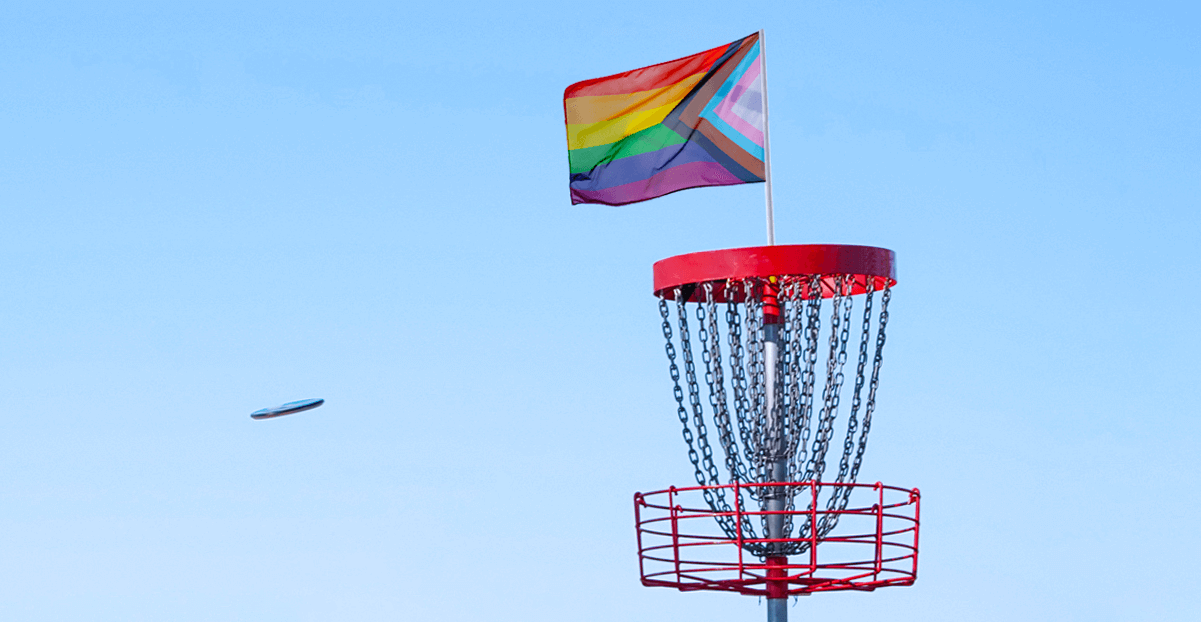
Modern, red disc golf basket with pride flag flying from it

Over 1.6 million individuals, or about 0.6 percent of the population, identify as transgender in the United States, according to the Centers for Disease Control and Prevention’s (CDC) Behavior Risk Factor Surveillance System (BRFSS) and Youth Risk Behavior Survey (YRBS). While visibility and open dialogue have increased dramatically in recent years, the UCLA School of Law, with use of CDC data, concluded that the percentage and number of adults who identify as transgender in the U.S. has actually remained relatively steady over time (2016 was the earliest point of comparison with the BRFSS and YRBS). Notably, that same data illustrates a recent shift toward acceptance of gender identity earlier in life as the youth transgender population has nearly doubled.

If the percentage of transgender individuals has largely remained unchanged, what has caused a perceived increase in conversation and controversy surrounding transgender athletes?

Polarization About Transgender Rights in Sports

Transgender rights have become a hot-button issue in both politics and sports. News outlets, politicians, and social media have a massive impact on the public perception of transgender individuals. 

In sports, particularly, there has been a zoomed-in lens on transgender women competing in gender-protected divisions. In 2021, Laurel Hubbard became the first openly transgender woman to compete in the Olympics when she participated in weightlifting. This sparked a wide range of public response, including outrage and hate speech. Many spoke to the "male advantage" in sports despite Hubbard's less than impressive showing (completing zero accepted lifts). 

Though the big debates are extremely recent, the International Olympic Committee (IOC) has actually discussed and developed its framework for transgender athletes to compete for close to two decades: The IOC first convened an ad-hoc committee of its Medical Commission in October 2003 in Stockholm, Sweden; in May 2004 the IOC publicly adopted the committee's recommendation that transgender athletes could compete at that year's games in Athens.

Since its initial ruling, the IOC has continued to review and update its gender-based eligibility guidelines based on new evidence. Only following Hubbard's performance, though, did the IOC's rules receive widespread public scrutiny.

Similar history is true of disc golf. The structure and policy for transgender athletes was in place years before the first openly transgender disc golfer began competing. 

What Are the Rules for Transgender Women Disc Golfers?

Currently, transgender women athletes are eligible to compete in women's divisions in disc golf if they either:

  • Have undergone removal of testosterone-producing organs, which may be accompanied by gender-affirming surgery, or
  • Had suppressed testosterone levels below 10 nmol/L for at least 12 consecutive months

This means that to play in a women's division at any PDGA-sanctioned event, transgender women competitors must submit paperwork, blood work, and/or medical history to show they have met all standards. Keep in mind, too, that access to and the affordability of medical transitions vary across states and countries, with many places requiring a therapist's diagnosis of "gender dysphoria" before any intervention takes place.

The PDGA's rules follow those adopted by the International Olympic Committee in 2015. The PDGA adopted them in 2019.

The 10 nmol/L measure was set based on research of typical hormone levels for cisgender men and women (men and women who identify with their sex as assigned at birth). However, the IOC recently released guidance on rules related to transgender athletes that advocates moving away from testosterone level testing as the practice has caused international controversies. For example, cisgender women athletes like sprinter Dutee Chand and middle-distance runner Caster Semenya – neither of whom is transgender – have a condition called hyperandrogenism that affects their testosterone levels and have both faced bans from competing in women's divisions.

Much like the IOC, the PDGA had rules in place for transgender athletes prior to the years it adopted its current regulations. After the IOC set its first set of rules for transgender athletes in 2004, the PDGA adopted those in 2010.

The first openly transgender woman competed in a women's division in disc golf in 2014.

In 2021, the IOC released a new Framework on Fairness, Inclusion, and Non-Discrimination on the Basis of Gender Identity and Sex Variations. The 10-point process provides sports' governing bodies with guidance for how to modernize their policies regarding transgender competition, and the PDGA is currently in the process of reviewing the framework.

"The PDGA medical subcommittee is committed to aligning the PDGA competition standards in conjunction with the new IOC guidelines and framework with regard to participation for transgender athletes," said PDGA Director of Marketing Danny Voss. "The committee's priority is to balance inclusion and access to competition with fair competitive practices formulated from evidence-based information. In the meantime, the current PDGA standards are in effect for all PDGA-sanctioned events."

Do Transgender Women Have an Advantage in Sports?

Research looking at the effects of gender transformation on athletes is generally sparse though there has been a small amount of data published on the topic.

One study performed by Joanna Harper, a medical physicist, long-distance runner, and transgender athlete, used the age grading method to compare race times of herself and seven other transgender female distance runners before, during, and after their transitions. The results of this study showed that all of the athletes tested within average range relative to their cisgender competitors. Obviously, these results cannot be extrapolated for all sports, but with the limited studies of transgender athletes available, this is one to note.

Another study performed by Timothy Roberts, a pediatrician and director of an adolescent medicine training program, utilized the Air Force's fitness test to compare athletic advantage before, during, and after transition. This study found that at the one-year mark currently used by the IOC, slight advantages may still exist. However, by the two-year mark, all advantages had been largely reduced to the level of an average cisgender female athlete. 

Roberts said there is no way to remove all of an athlete's advantages – regardless of their gender identity – according to a report of the study by NBC News. 

Roberts referred to the notion that upbringing, economic standing, and hereditary factors all play major roles in an individual’s athletic advantage. Someone who grows up in a supportive household that can fund athletic training, for example, will have an inherent advantage over someone who doesn't have access to equal opportunities. Additionally, even among cisgender women there is massive disparity between "good" or "bad" frames for different sorts of athleticism (e.g., the vast differences between ideal builds for gymnasts versus those of basketball players).

Some individual sports' governing bodies, such as cycling's UCI, rugby's World Rugby, and swimming's FINA, have gone further than the IOC in their rules regarding when transgender women can compete in gender-separated divisions. World Rugby has an openly-stated ban on transgender women participating in women's competitions, and, though they aren't phrased as such, FINA's requirements also essentially amount to a ban. 

Largely, these decisions were made due to uncertainty surrounding potential advantages of transgender athletes. More information and scientific research are vital to a fair assessment of competition moving forward. 

The Effects of Gender Transformation on Transgender Women Disc Golfers

In a sport such as disc golf that is largely based on touch and technique, the effects of transitioning on transgender women may look different than other sports. 

"The athlete would lose strength, explosiveness, stamina, endurance," said Laura Nagtegaal,  a transgender FPO player and member of PDGA's Board of Directors, Competition Committee, and Women's Committee. "In disc golf, that would mean losing distance [the more that distance is based on technique rather than muscle/power, the lower the effect on distance thrown by losing testosterone is most likely going to be]. They would not lose their putting game or their mental game. Technique is not hereditary, and it certainly is not gendered. It's thousands of hours of practice and perhaps a bit of talent and predisposition."

Nagtegaal went through her gender transformation surgeries all while continuing to play disc golf in the MPO division until she met all standards to move to FPO. 

"As the effects of Hormone Replacement Therapy lead to testosterone deprivation, my power level dropped - and with it, my rating," Nagtegaal said.

A graph showing generally declining PDGA ratings for a disc golfer transitioning to be a woman
Nagtegaal's rating as she transitioned.

At Nagtegaal's peak in MPO, her rating was 905. After beginning hormones, her rating fluctuated greatly but eventually dropped to below 875. After her gender reassignment surgery, her rating took another hit: She dropped to below 870. In addition to her power dropping, she saw her usable distance decrease considerably, falling from about 380-390 feet/116-119 meters to barely 300 feet/91 meters.

Natalie Ryan, a transgender woman competing in FPO who recently won her first Disc Golf Pro Tour event at the Great Lakes Open, transitioned prior to learning how to play disc golf. Her distance, she said, came from a strict fieldwork regimen – six to seven hours per day in her early career – and not biological advantages.

“Not a lot of people know that’s what it actually takes to throw as far as I do," Ryan said. "They think it comes to me naturally, but it doesn’t."

Hate the Rules, Not the Players

Currently, what most frustrates many transgender women disc golfers we spoke with is that public discussion of transgender women athletes largely consists of personal attacks on individuals who are playing by the rules. 

"If the policy is correct or not, that is for the medical committee to decide," Nagtegaal said. "Currently, we are all eligible to compete following all of the rules. Don't like it? Say you don't like it, but do not personally attack us for following the rules."

The two entities most involved in disc golf competition policy, the PDGA and the Disc Golf Pro Tour (DGPT), are unified in their mission to protect players and uphold the current rules. Within the last year, both organizations released official statements regarding transgender competitors. These statements emphasize the sport's rules related to transgender competitors (bloodwork requirements prior to playing in gender-protected divisions to show hormone suppression through medication and/or surgical procedure) and established policies that prohibit hate speech, misgendering, and other harassment both online and in-person.

"Whether folks agree or disagree with the current PDGA policy on transgender competition, any comments that are hateful, bullying, or incite potential violence against any DGPT athletes will simply not be tolerated," Disc Golf Pro Tour CEO and Tour Director Jeff Spring said. "There is plenty of room to have an opinion in contradiction with the PDGA policy on transgender competition and to also show respect and understanding for the human beings involved with the topic. I implore the members of the disc golf community that feel compelled to speak their minds on this topic to consider this and to find more appropriate rhetoric or spaces to share their thoughts if necessary."

Notably, shortly after the first win by an openly transgender woman at a DGPT event on July 31, 2022, both the DGPT and PDGA reaffirmed their commitment to upholding the current rules regarding transgender women's participation in sanctioned competition.

The efforts of these governing bodies are vital to the safety and support of transgender players. 

"I don't think the importance of these statements can be emphasized enough," said Nova Politte, an openly transgender disc golfer. "We have so few staunch allies that this gesture means everything. It means that at least at a PDGA-sanctioned tournament or a DGPT tournament it's not open season on us, that there will be consequences for treating us badly, and that we will be taken seriously as people when we report abuse."

Personal attacks and hate speech are an unfortunate, but prevalent, portion of the transgender narrative within the sport of disc golf.

"It's strange to me to read what they write because almost all of it is dead wrong," said Politte. "They get my life wrong, they get my motivations wrong, they even get basic biographical facts about me wrong. It is as if they have made a scarecrow which bears almost no similarity to me whatsoever, hung a sign around its neck which reads 'Nova,' and then they point and laugh at the scarecrow, thinking this will somehow hurt me. It doesn't. The only emotion that registers for me is pity because these strangers are expending so much mental energy on just hating someone they don't even know." 

Transphobic comments and hate speech – calling a transgender woman a man or addressing her as "he," for example – and are especially harmful when individuals are newly open with their gender identity or sexuality. 

"Local groups have a big opportunity to make people feel more welcomed, but they can also do the opposite," said Chloe Alice, an openly transgender disc golfer. "Bullies in the sport, especially when you're new to coming out, will hinder people from playing. To those people commenting horrible things: There are people watching and you're the ones keeping the sport from growing."

Visibility of Transgender Athletes in Disc Golf
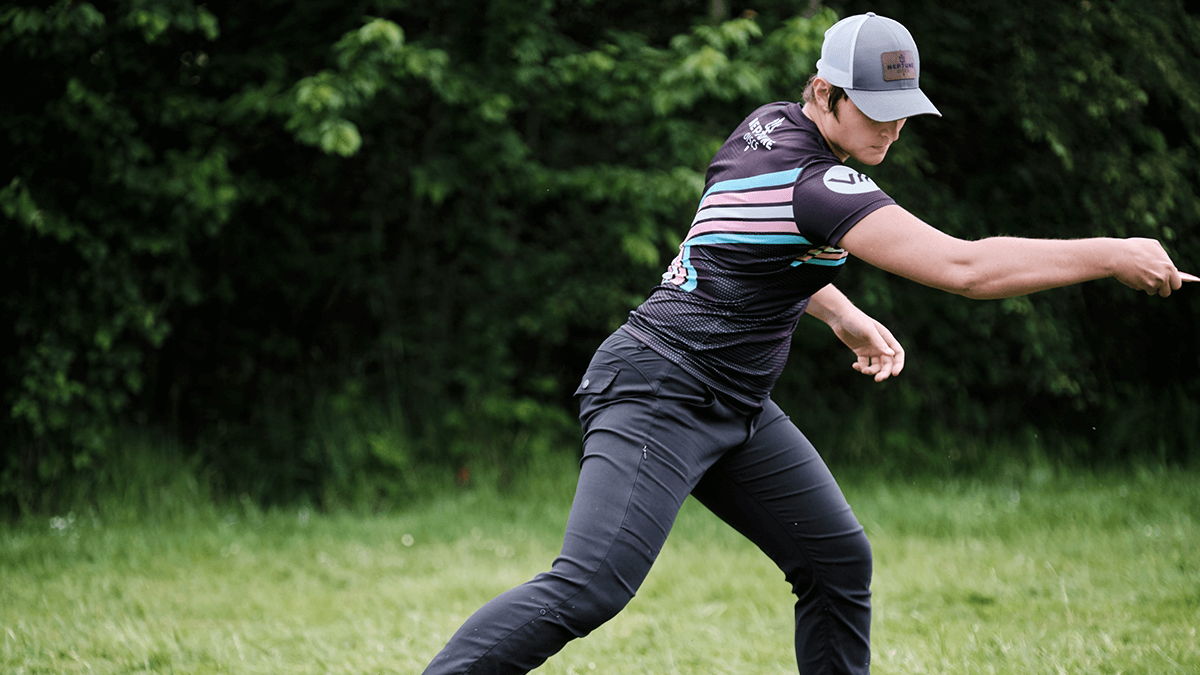
A woman prepares to throw a disc golf disc
Professional disc golfer Natalie Ryan set out on tour to help increase visibility of transgender players. Photo: Kevin Huver / Disc Golf Pro Tour

When on a bigger stage, transgender disc golfers are bigger magnets for negative comments and criticism. 

"I was the first openly transgender world champion," said Nagtegaal, who won the FA40 division in 2019. "I faced a lot of turmoil, but I faced it head-on knowing I wanted to be the lightning rod so maybe one day someone like Natalie or Chloe or whoever else could show up and not have to face the same storm I did."

As ugly as the conversations often get, Nagtegaal realizes that never having an open discussion about transgender or any LGBTQ+ issues is also not a solution. Acknowledgement of the LGBTQ+ community and discourse about how current societal norms affect its members aren't political statements but necessary stepping stones to understanding and peaceful, respectful coexistence.

"Visibility will inevitably lead to awareness; through awareness the path to acceptance can be found and followed; somewhere between awareness and acceptance, open dialogue must exist," said Nagtegaal.

While this dialogue happens, some transgender athletes hope to serve as beacons for others like them – visible lights to help guide those wading through confusion, vitriol, and even threats of physical violence.

"The visibility of transgender competitors is incredibly important," Ryan said. "The more visible each person can be, the more likely more people will join. It not only can help grow the sport, it can help kids that don't have anyone to look up to to have someone there to root for – someone more familiar to them that is going through the same struggles. I chose to tour so that all the other people who needed someone like them to be represented would have someone."

Work to Be Done, On and Off the Fairway

Through open dialogue, increased visibility, and structural support from the governing bodies of the sport, there is hope for increasing disc golf’s acceptance of diversity. However, there is a lot of work to be done by all parties active in the community. 

"Being welcoming means being not welcoming to intolerance," said Politte. "If intolerant voices are speaking, and no tolerant people are countering that message, then intolerance carries the day. What this means at the local club level, or even just out at the park, is that if someone is saying or doing bigotry, it's not enough to just let them speak and then to carry on as if nothing had happened. They must be challenged, out loud, at that very time. How many times has an LGBTQ+ player who is new to a group been slurred indirectly, heard nobody challenge this, then drifted away from disc golf never to return?"

Allies are a vital part of the fight for equality on and off the fairway. 

"When just those affected speak up, you don't get the traction," said Nagtegaal. "You're 'just a minority.' When allies join, the traction grows. It was the case for the #metoo and Black Lives Matter movements. I hope, for diversity, that is the case here too."

geschätzte Lesezeit: 23 min
Disc Golf’s Lia Thomas Moment
DGPT photo of professional disc golfer Natalie Ryan.

As a biologically male player continues a meteoric rise on the female circuit, women are starting to speak out.

Jonathan Kay

Jonathan Kay

· 18 min read

For female professional disc golfers, the July 29–31 Discraft Great Lakes Open (DGLO) in Milford, Michigan represented a watershed—marking the first time in the young sport’s history that an Elite-series tournament offered women the same first-place prize money as men. “It should have been a great moment,” one of the female competitors told me once the crowds had gone home. “But then the thing ended, and the winners weren’t a male and a female. It was basically two males.”

By this, the woman was referring to male star Calvin Heimburg, who won what is formally called the “Open” division (but which, in practice, is 100 percent male); and the female-division winner, Natalie Ryan, a trans woman who’s been playing disc-golf tournaments for only three years. Despite this lack of experience, Ryan already is starting to make victory something of a habit, winning not only DGLO, but also a second Elite event in Leicester, Massachusetts this past weekend. As a result, Ryan is now ranked as one of the world’s top five female-classified disc golfers.

The first-place prizes at DGLO were US$6,000—hardly a bonanza by the standards of professional sports. But for disc golf’s touring women, many of whom have spent a decade or more on the road, trying to scratch out a living as full-time athletes, it’s a huge amount of money.

“The [current] female tour only came on the scene in 2016,” a well-known female pro told me. “There’d been a tour going on since 2000, but in those days, even most of the top professionals had side jobs. The men’s game was probably economically viable as a full-time occupation by the early 2010s, but the women’s game wasn’t really viable until a few years ago. So yeah, the timing of this is interesting. It’s just all too convenient that now is when [trans women] decide to jump in and make a splash.”

Ryan is not the first openly transgender disc golfer to compete in a Professional Disc Golf Association (PDGA) event—a distinction claimed by a Massachusetts trans woman named Kelly Jenkins. Nor is Ryan the first openly trans disc golfer to win a prominent event—a distinction that belongs to Dutch player Laura Nagtegaal. And in both 2021 and 2022, the PDGA Masters World FP50 championship (for women aged 50 or over) went to a trans woman named Nova Politte (who, at 6‘4”, self-describes as ”the tallest female disc golfer in the world”). But Ryan’s victory was different, because DGLO is such an important tournament. Thanks to its Elite Series classification within the Disc Golf Pro Tour (DGPT), it ranks as one of the few events that allow top players to compete for the annual Tour Championship, which in turn can yield higher payouts and more prominent media opportunities.

Among the tight-knit touring group of about three dozen top female players, concerns about male-bodied disc golfers once remained largely confined to private conversations, as most were anxious to protect the feelings of trans players and avoid offending corporate sponsors. But Ryan’s DGPT victories seem to have prodded some of these women to become more vocal. This month, two of them—whom I’ll refer to as Jane and Mary in the reporting that follows—spoke to Quillette on condition of anonymity.


Until recently, disc golf occupied something of an ambiguous place in the sporting hierarchy, halfway between niche hipster hobby and mass-participation activity. But the sport positively exploded during the COVID years, when otherwise housebound athletes found themselves looking for something new to do with their time and energy (myself among them). And the boom has done much to bring disc golf into the mainstream. The game is simple, cheap, safe, and fun—basically regular golf, but with discs and baskets instead of balls and holes. And for many, it’s proven equally fun to watch as play. Major US tournaments sometimes attract tens of thousands of fans. The sport has also developed a rich Internet subculture, including a US$99-per-year subscription-based broadcast called Disc Golf Network.

Rounds of disc golf recorded on UDisc, a popular scoring app, by year, 2016-2020.

Because disc golf is a modern sport played mostly by young people, it tends to channel a liberal live-and-let-live ethos. Recreational drug use isn’t uncommon, and even some of the most skilled professionals seem to exhibit something of a beatnik attitude. Hyper-competitiveness is generally shunned, and a spirit of inclusiontypically prevails. So it’s easy to see why a progressive posture toward transgender participation would come naturally to the people who enjoy and govern the sport. This attitude was encoded in a Statement on Transgender Athletes & Community Guidelines put outby the Disc Golf Pro Tour earlier this year, indicating that the DGPT “recognizes the validity of the transgender experience [and] support[s] the decisions made by any members of the disc golf community to live their life in the most authentic way possible.”

Meanwhile, industry publications such as Release Point have covered the issue of gender largely through Pride-themed homages to trans disc golfers. In early 2021, a PDGA Event Support and Training Manager named Mike Sullivan authored a long Twitter thread in which he assured everyone that “women’s divisions are not in danger of being dominated by whatever South Park satire version of transgender women you might be concerned about,” and warned that those voicing concerns had been swayed by “people with bad intentions” such as podcaster Joe Rogan.

Yet the PDGA’s own reported data suggest that performance differences between males and females are stark. In the “Advanced” amateur division (a classification that is technically open to all amateur players but which is almost entirely male), players typically are capable of throwing a maximum distance of between 300 feet and 450 feet. In the case of “Advanced Women,” on the other hand, the corresponding figures are a third lower: 200 feet and 300 feet. The world record for longest disc golf throw by a man is 1,109 feet. For female players, the record is 569 feet. And it is worth noting that Ryan, the female tour’s only trans player, also happened to win disc golf’s 2021 US Distance Championship in the female category with a throw of 458 feet.

Nor is the male-bodied advantage in disc golf confined to full-throttle open-field drives. According to Jane and Mary, the disparity also manifests itself on densely wooded holes, which sometimes require players to contort their bodies in awkward positions while shooting around trees from a standstill.

“I would say that one of the biggest advantages of the [male-bodied] players is their ability to scramble in tight situations when a disc goes off the fairway, to just stand there and blast a shot through the woods,” Mary tells me. “I’ve seen both [trans player] Chloe [Alice] and Natalie [Ryan] do this. They’re just standing still and throw the kind of [forehand shot] that I’ve never seen a female throw even under perfect conditions.”

“What makes it worse is that Ryan’s form isn’t even that good,” says Jane. “If it were, she’d be out-throwing us by even more. So while the rest of us spend years refining our form, trying to keep up and get more distance, she’s been in the sport only—what?—three years or something. And she’s already said [publicly], ‘Oh, I’ve got my form down. I don’t need to practice that.’”

“One time, a friend on the tour—another female golfer—told me about Kelly [Jenkins] throwing a 320-foot thumber [a difficult overhead shot launched over tall obstacles with an unusual grip] at women’s nationals,” Jane adds. “And then, when people were standing there in disbelief, [Jenkins] says, ‘Ha ha, softball!’—like, telling people that she learned to do this kind of shot from playing softball when she was young. But I know women disc golfers who’ve played softball their whole lives. They’ve never seen a woman throw a disc like that.”

Statistic: Gold medal winning distances in the Men's and Women's javelin throw at the Summer Olympics from 1908 to 2020 (in meters) | Statista

None of this should come as a surprise to anyone who’s studied male-female differences in other sports that involve throwing. The world javelin record, for instance, is 98.5 meters for men, but just 72.3 meters for women. In shot put, hammer throw, and discus, men and women tend to throw similar distances, but do so with differently weighted objects: For men, the metal ball used in shot put and hammer throw weighs more than seven kilograms; for women, just four kilograms. In discus competition, the disc used by men weighs two kilograms, while women use a disc that weighs just one kilogram. Earlier this year, The New York Times profiled pitcher Kelsie Whitmore, the first woman of our era to play in any league partnered with Major League Baseball. Whitmore’s fastball tops out below 80 mph, a speed that’s commonly achieved by male high schoolers in their mid-teens.


On August 2nd, days after Ryan won the female division at DGLO, the Disc Golf Pro Tour put out a statement titled DGPT Reiterates Statement on PDGA Transgender Competition Policies, noting (somewhat euphemistically) “an increase in the volume of questions and feedback from the disc golf community on the topic of gender-based divisions and fair play,” and emphasizing that Ryan, and the tour itself, are simply going by the policies set down by the PDGA—policies that permit biologically male players to compete as females, so long as they bring their blood testosterone levels down below 10 nmol/L.

The problem, as critics of male-bodied participation in female sports often have pointed out, is that academic reviews of musculoskeletal changes in transwomen have shown that the strength loss associated with post-pubescent testosterone-reduction regimes is small, and so the trans strength advantage over biologically female competitors persists. As discussed below, moreover, there seems to be some confusion about whether the PDGA is enforcing even its own loose standards.

Tennessee-based player Jennifer Castro, who competes in the Amateur Masters Women 40+ category, says that “I personally know of women who refuse to sign up for events if a transgender is playing, not because we hate them but because we feel we have zero chance, so what is the point of wasting our money on registration fees?”

Jennifer Castro, photographed following the 2022 Alabama Women‘s Disc Golf Championships

In late August, Castro became so exasperated by the PDGA’s permissive stance that she mounted a sort of sting operation, presenting herself anonymously to the organization as a transgender woman seeking to compete in a female category. After Castro’s inquiry was routed to the PDGA’s medical committee, outgoing board member (and five-time Women’s Open World Champion) Elaine King wrote back with the following advice:

If you meet the criteria to play in gender-based divisions then you can register with the PDGA as “F” or “female.” You are under no obligation to discuss your personal information with anyone. No one may challenge your eligibility to play in a female division unless they can provide evidence that you may not meet the requirements. Note that a player’s appearance is NOT a basis for any challenge … Some transgender women have voluntarily elected to provide proof of their eligibility to the Medical Committee in confidence. In doing so, any potential question about their eligibility to play in that division could be quickly settled. However this is purely voluntary and not required.  

In the days since, Castro has gone on a very public Facebook campaign, citing King’s message as evidence that, except in cases where a player who’s already listed as male seeks to change status to female, “transgenders don’t need to submit anything upfront. [The PDGA] is just taking their word that they meet the criteria medically.” Castro also has linked to a TikTok video by trans female competitor Chloe Alice, who’s confessed on Instagram to neglecting to take prescribed testosterone-suppressing “pretty pills” (as Alice describes them) for days at a time.

@chloe_alice__ My pretty pills! #trans #transgender #transmtf #transftm #lgbtq #prettypills #estrogen #testosteron ♬ original sound - Chloe Alice

Castro believes that she’ll pay a price for speaking out, but told me during a recent phone call that she doesn’t care. “I don’t play at the pro level, so it’s not like my livelihood is on the line,” Castro told me. “Unlike the pro women, I can speak my mind and say what they’d be saying if they felt they could.”

At a recent Nashville tournament, Castro reports, her sponsor, a small local company called Momentary Bliss discs, politely suggested that she take a less “hostile” approach with her anti-PGDA commentary. Castro refused, and the partnership was ended.


According to four-term PDGA Board of Directors member Wilbur Wallis, “it is almost certain that this topic”—by which he means trans women competing in protected female disc-golf categories—“will be discussed at length at the upcoming PDGA Fall Summit,” and he has asked that interested members submit “scientific studies” for consideration by the PDGA’s newly formed Medical Subcommittee on Gender-Based-Divisions to review. It is possible that the process Wallis outlines will end with the PDGA taking steps to exclude natal males from protected female categories. Much as the controversial participation of trans NCAA swimmer Lia Thomas in female races caused a reckoning within that sport, so might Ryan’s triumphs spark a similar reckoning in disc golf.

On the other hand, because disc golf is a relatively young and (until recently) obscure pursuit, those “scientific studies” Wallis is looking for are in short supply. What few academic articles exist in regard to disc golf tend toward titles such as Disc Golf, a Growing Sport and Disc Golf as a Public Health Option. Since it might be years before authoritative peer-reviewed studies that focus specifically on male athletic advantages within disc golf are produced, the PDGA board would likely have the cover it needs to maintain the status quo, should that be the preferred option of a majority of board members.

In this regard, it’s worth noting that the seven-person PDGA board of directors includes the aforementioned Laura Nagtegaal, a trans woman who self-describes on the PDGA’s website as “a volunteer counsellor for gender-questioning and transgender folx … active (both on an activistic and philosophical level) in advocating for diversity, equity and inclusion.” In 2019, shortly after transitioning to female self-identification, Nagtegaal entered the Amateur Masters Women 40+ World Championships, and won by 21 strokes in a field of 17 players. According to King, Nagtegaal also runs “a closed [Facebook] discussion group for transgender women [disc golfers].” Another board member is Leah Tsinajinnie, whose listed priorities include expanding disc golf’s appeal to “people identifying as LGBTQ+.” The other five members are all men.

According to one source I spoke with, several board members are sympathetic with the complaints of women who want male bodies excluded from protected female categories. But they also feel reluctant to act unless their stance is publicly supported by a critical mass of high-profile players. For their part, on the other hand, many top players reportedly don’t feel they can provide that public support until the board signals clearly that plain talk about male and female biology won’t be denounced as transphobic.

It’s a collective-action problem, in other words. According to Jane and Mary, about 80 percent of the women on tour oppose the inclusion of male-bodied players in female divisions (a figure that’s admittedly impossible for me to confirm). But no one in this majority group wants to be among the first to come forward, for fear of being labelled a bigot—thereby allowing the other 20 percent to hold sway.

Moreover, any PDGA move to tighten the rules on female participation in protected female categories will have the effect of invalidating—or at least implicitly devaluing—victories that have already been earned by trans disc golfers. In particular, board members would face the mortifying prospect of retroactively demeaning their own board colleague’s 2019 Amateur Masters Women 40+ World Championships. Ryan, too, would go from someone being feted weekly in PDGA corporate media to, overnight, a male-classified also-ran who happens to have a few awkwardly asterisked victories in the female record books. In such a scenario, it would be difficult not to feel sympathy for these trans women, and others like them, all of whom relied on the existing rules set by the PDGA.

On the other side of the ledger, however, are the vastly more numerous biological women who see the presence of trans women as more than just a competitive and financial threat, but also a source of on-field social and psychological tension.

“My experience is that about half of the trans women are really fun to play with,” Jane tells me. “With the other half, they have this really obvious masculine energy—and so you’re constantly being reminded that you’re basically playing with an amateur-level male. It’s gotten to the point that even the players that I personally like who are transgender—I can't watch them play. I don’t watch them throw. I don’t watch them putt. The sight of it reminds me that I’m in an unfair situation and it makes it hard for me to maintain my mental game. I’m just constantly thinking about, you know, ‘Wow, she shouldn’t be able to throw that far because that’s really bad form, but it went 400 feet.’”

“I’ve been playing sports since I was in kindergarten,” Mary says. “I was always small, but I didn’t care what the sport was. I would take on any girl, any woman. But then with this thing that’s happening now, it’s different. No matter how much I work out, that’ll never be enough to have the physical advantages of a person who’s a male and can be strong without [going to the gym].”


During my research, I spent a lot of time reading social-media threads and arguments about trans disc golfers participating in protected female categories. Readers won’t be surprised to learn that attitudes break down largely (though not entirely) by medium. On Twitter, where discourse on this subject tends toward fashionable, hashtag-compliant political postures, the dominant view is that of Sullivan, the aforementioned PDGA manager who instructs women that “we don’t have evidence that there’s an unfair [trans female] advantage.” On Reddit, the argument is more mixed. Then there are the deeply tribalized private Facebook groups—one of which I was given access to—that tend strongly toward one side or the other.

Almost everyone acknowledges that trans women have at least some physical advantages over their biologically female competitors. The question comes down to whether those female competitors should be forced to accommodate male bodies as the price of inclusion. Jane, Mary, and Castro argue that the answer comes down to science and the reality of human biology. Their opponents say that it comes down to attractive-sounding moral imperatives such as “recogniz[ing] the validity of the transgender experience” and giving trans individuals the “comfort to be who they are, on and off the fairway, every day of their lives.”

This kind of battle is playing out in dozens of sports, and has been for years. But disc golf provides an especially interesting case study, because Ryan’s sudden ascent has caused years’ worth of female concerns to spill out in a compressed time period. The regulatory environment has also become a lot more fluid of late, giving women hope that things might change.

The PDGA has a long-term goal of getting disc golf admitted as an Olympic sport. And since 2010, PDGA rules on trans participation have tracked the pronouncements of the International Olympic Committee, including the IOC’s 2015 standards, which established the 10 nmol/L testosterone standard for trans women. But in 2021, following the controversy surrounding the appearance of middle-aged trans female weightlifter Laurel Hubbard at the Tokyo Games, the IOC created new guidelines that allow “each sport and its governing body to determine how an athlete may be at a disproportionate advantage against their peers, taking into consideration the nature of each sport.” This means that the PDGA is now at liberty to go the way of World Rugby, which recently declared flat-out that “Transgender women may not currently play women’s rugby” (though the violent nature of that game arguably makes it a special case); or the international governing body for swimming, which recently barred swimmers who “experienced any part of male puberty” from women’s events.

The disc-golf case study is also informative in the way it lays bare the different motivations of powerful actors within the sport’s overall community. According to industry estimates, females account for just 20 percent of elite players, and about 14 percent of active competitive players at all levels. For many years, groups such as Sara Nicholson’s Throw Pink have sought to recruit women into the game. It’s an obvious growth opportunity for the sport, and so one might think that female concerns would rank high on the PDGA agenda. But in reality, the most powerful voices are often the corporate sponsors who effectively supply the bulk of touring pros’ income. The #MeToo movement had its heyday years ago, and many of these companies are stepping over themselves to present themselves as champions of more faddish causes. The vast bulk of disc buyers, after all, aren’t professionals in sex-protected categories, but recreational consumers playing in mixed male-and-female leagues. Rainbow stickers and slogans about inclusivity lend themselves well to marketing campaigns. Angry women describing their frustrations with all those stickers and slogans, much less so.

“I actually had a candid conversation with my sponsor the other day for an hour about this issue,” Mary told me. “And toward the end, I said, you know, ‘If I can just be as honest and blunt as possible, I think [the situation] is disrespectful because no man will ever understand or know what it’s like to be a woman.’”

Like other players—including one who showed me a long set of text messages with her sponsor—Mary says she got a fair hearing. But in the end, she still wasn’t given permission to go public with her concerns, unless it was done in concert with a critical mass of other tour players. Again, the collective-action problem rears its head.

Both Jane and Mary report receiving private messages of support from male colleagues. But in those cases where male disc golfers speak out publicly, it’s more likely to be in the service of transgender rights. (Castro’s Facebook page, for instance, has been regularly trolled by a male player named Sam Gibson, a progressive activist known for his participation in the Occupy Portland movement.)

Even some top female veterans have lent their voices to the cause of trans participation in sex-protected categories. This includes Paige Pierce, the sport’s all-time highest earnings leader and a pre-eminent female presence within PDGA branding.

In January, about a dozen female players avoided the highest female division of a small Alabama tournament, apparently in order to protest the PDGA’s laissez-faire approach to trans women. When that move left Chloe Alice (whose TikTok video about “pretty pills” was referenced above) playing alone in that division, Pierce and several other high-ranked women signed up to play alongside Alice as a gesture of solidarity. On Instagram, Pierce then explained her decision this way:

This isn’t an event I would typically play being that it was during my off season and it was a lower tier of an event. I wanted to talk with you all about why I chose to play. It was a local event and I started to hear talk around town that there was a big group of women that had initially signed up for the event only to later drop out of the division because one of the competitors is transgender. I want to stop here and take a breath. I am not sure my exact opinions on what ‘should’ happen yet. Should we have a separate division? Should we test hormone levels of every competitor? I don’t know. But should we ban [them al]together and leave them behind? HELL NO. I am sorry for my language, but I feel very strongly about this … We are all a part of the frisbee family. We are all doing our part to find our own happiness. As I write this I am finding that I AM going to make a New Years resolution. Whenever I hear someone passing judgement towards another, I don’t nod or let it pass. I stop them in their tracks and remind them, we are all human. Let’s spread love, not hate.

For Pierce’s supporters, the move was the epitome of grace and empathy. “You’re using your power and privilege for good! We look up to you, Paige!” said one commenter. Another replied, “Paige, you’re awesome, and a shining example of how we should treat others. You made a horrible story an awesome story.”

But as Jane and Mary see it, Pierce’s declaration was a low blow, even a betrayal. A group of female players were protesting what they see as a discriminatory anti-female policy, and the game’s biggest female star swooped in to present herself as a saviour figure. What’s more, Paige suggested that those behind the act of protest were motivated by “hate” and a desire to “ban” transgender people from the sport, which both Jane and Mary see as a complete misrepresentation of what had happened. (Pierce, Ryan, and Nagtegaal were given an opportunity to provide comment for this article, but did not respond.)

Other commenters suggested that Pierce was merely being opportunistic with her virtue signalling at a time when no trans competitor had yet presented as a serious tour threat. But in the months since, that’s changed, of course. At the MVP Open, Ryan’s victory bumped Pierce from a second place finish down to third. And of the last four Elite tournaments in which Pierce and Ryan have both competed, Ryan has bested Pierce in three of them. The former, as already noted, has been playing competitive disc golf for just three years. The latter is a 16-year veteran who’s won the Women’s Open World Championship in five out of the last 11 seasons.  

It’s notable that Pierce hasn’t, to my knowledge, spoken publicly about the issue of trans inclusion in female events in recent months. And some fans are wondering why. Back in January, a commenter on her Instagram post darkly noted, “Just wait until you finish second behind a ‘man’ for a few years. [Your] opinion will change.”

Maybe it already has. We’ll find out in coming days, I suspect, as I am told that there is a petition that’ll soon be making the rounds among touring female players, finally putting on public record a majority opinion that, till now, the women have largely confined to private conversations. What remains to be seen is whether PDGA officials, faced with such a document, will respect the “validity” and “authenticity” of the biological female experience.

geschätzte Lesezeit: 6 min
undefined
Chloe Alice has experienced the collective joy of celebration in disc golf, but also the negativity directed toward transgender players. Photo: Disc Golf Pro Tour

One of our core values at UDisc is to include everyone. We're determined to help disc golfers of all backgrounds and skill levels succeed, from beginners to world-class professionals and, as always, we treat everyone with respect. So, we're taking time this Pride Month to celebrate the people and events making a difference in the LGBTQ+ disc golf community. We encourage players to take an inclusive mindset to the course and offer a spin on the common idea of “playing through” a group. Instead, play with. You might find that disc golf can be better with an open embrace.

During the final round of the 2022 Dynamic Discs Open in Emporia, Kansas, Chloe Alice aced the iconic 320-foot/98-meter island hole 16. The crowd that had set up chairs to watch the hole all day for the chance to see such a shot commenced a celebration that was as you'd expect: amazing and energetic.

Once her Discraft Undertaker hit the chains, Alice jumped up and down in excitement and sprinted for the basket, a train of high fives and raucous cheers guiding her the whole way there. At that moment, everyone there was simply celebrating a great disc golf shot, as you can see in this footage from MX Disc Golf:

For Alice and other transgender disc golfers, though, such moments of collective joy aren't the norm.

Alice is a transgender woman competing in the FPO division. She has played disc golf since she was 14 years old, but at age 27 this is her first year setting out to play PDGA Majors and on the Disc Golf Pro Tour. She began her transition five years ago, fully meeting all PDGA criteria (which includes multiple diagnostic tests of testosterone levels) to play in the gender-protected division.

Local Support, Intolerance on the Road

When Alice began competing, her local community in Pensacola, Florida, was largely supportive. She shared that, while there were some individuals who made it well known they did not approve of her playing, they were the minority. However, as she began traveling for tournaments, she was not always greeted with the same level of support.  

"While playing a tournament in Mobile, Alabama, I was winning going into the final round," Alice said. "I went onto the local Facebook page to look for tee times and was horrified to see a post that said 'Congrats to the men who will win MPO and FPO this weekend' with over 300 comments. The post itself was bad, but the 300 comments were worse, talking so badly about me for just showing up." 

Out of the 300 comments, only around 50 of them were defending Alice.

Player with long purple and blue hair lines up disc golf drive
Chloe Alice lines up a drive. Photo: Disc Golf Pro Tour

"I didn't even want to show up for the final round," she remembered "When I did, I didn't care. I stepped up to the tee pad and just threw, turned around, and kept walking. It affected me a lot. I went on to win, but even going up to accept my trophy was something I didn't want to do since I knew I would be booed."

At another tournament in Fairhope, Alabama, Alice experienced more transphobia. When word hit town that Alice may play, several women decided to move from FPO to MA3 to corner her into having no one to play with. 

"Women can play in those divisions – that's fine – but I knew it was to alienate me," Alice said. "Some of the professional women on tour and my friends heard this was happening and signed up to play with me. They even sponsored my entry into the tournament.

"We ended up with this awesome group of ladies competing," she continued. "It even ended up getting filmed, which was awesome, but once it was posted, the negative comments started to come."

One step forward and two steps backwards – some members of the community came together to support Alice and the rights of transgender players, attempting to turn a negative situation into a positive memory for her. But the social media presence of the event led to hundreds of negative comments directed towards Alice, diluting the uplifting impact of the experience. 

"It's hard to not look at social media – I have to look at it all," Alice admitted "I'm a big bubble of energy, and to have someone just not like me for who I am, that sucks. I love people, I love everyone. I can't not read them, but I'm hurting myself by doing so. There's this small spark of hope [that comes into my head]: 'But maybe someone is being nice.'"

'A Footprint in the Experience of a Trans Person's Life'

Despite hateful comments and blatant acts of transphobia during her disc golf career so far, Alice's positivity and light has not been dulled. 

"Maybe I can be a footprint in the experience of a trans person's life," said Alice. 

"I've had many individuals thank me, over social media and in person, for just being out there myself," she continued "One couple came up to me and said I gave the wife courage to play. They saw the hate I was getting but told me I was making a difference. Those are the moments I put up with all of the bad for. With me and other transgender people playing, people in the sport coming out as LGBTQ+, going public with who they are – people in the community watching are seeing that and saying, 'This person is doing that, maybe I can play, too.'"

For individuals who are fearing being openly transgender in their local or competitive scenes, Alice encourages them to take the leap. 

Player with long purple and blue hair after releasing a disc golf drive (side-rear view)
Chloe Alice powering one down the fairway. Photo: Disc Golf Pro Tour

"If you're considering playing, do it," she said. "If you're worried about what people will say, that shouldn't be your reason not to play. You don't have to be in the spotlight. If local people are giving you terrible comments, just don't play with them. Odds are there will be some people in your area that will still like you regardless of where you came from. Don't let that be the reason you don't play, and definitely don't let the comments I get be a reason either. 

"Disc golf is good for everyone – straight, gay, weird, normal, transgender, cisgender," she said. "It's awesome, and it should be accessible for everyone."

When Alice had her moment in the spotlight at the DDO, she got to experience what every player should: pure, enthusiastic support from the disc golf community. 

"When I aced, it didn't matter that I was transgender," she said. "I couldn't go five minutes without a high five or a congratulations. I felt like a celebrity."

But being treated like a disc golfer first and respected on those grounds should not be reserved only for aces. Alice and other transgender individuals should feel enough comfort to be who they are, on and off the fairway, every day of their lives. It is the job of everyone on the course to make the sport a welcoming place for all. 

geschätzte Lesezeit: 8 min

Frisbee golf or disc golf – what's the difference? As far as the sport they refer to, nothing at all.

Still, say "Frisbee golf" in the presence of some players, and you'll swiftly be told, "It's disc golf." This is especially true in the United States, which is home to both the most disc golfers and most disc golf courses of any country in the world.

However, while plenty of people are quick to say "Frisbee golf" is wrong and "disc golf" is right, not many know the reasons for that common belief. In North America, an even smaller number are aware that in quite a few countries, "Frisbee golf" is perfectly acceptable and used by even the most serious players.

Become one of the enlightened few by joining us in a look at the history that gave rise to the Frisbee golf v. disc golf debate.

Why Is Frisbee Golf 'Wrong'?

The U.S. company Wham-O has owned a federal trademark for the word "Frisbee" since 1959 and started using the word for its products as early as 1957. Due to Wham-O's trademark, Frisbee can't be used in any official capacity to reference flying discs or games/equipment involving them in the United States without Wham-O's permission.

Prior to its trademark, Wham-O sold a plastic flying disc invented by Fred Morrison called the Pluto Platter. According to Phil Kennedy, co-author along with Morrison of the book Flat Flip Flies Straight: True Origins of the Frisbee, Wham-O likely took up the strange word "Frisbee" in response to a 1957 Sports Illustrated article, which said:

At Princeton, the air has been filled lately with flying objects, every one of which can be identified as a Pluto Platter made by Wham-O. The undergraduates ignore the official name, though, and call the curious gadgets Frisbees.

That name likely harkened back to empty Frisbie Pie tins students tossed well before Pluto Platters were around, but whatever the origins of the word "Frisbee" are, we're here to find out how the name "disc golf" came about. And for that we need to jump to the 1960s.

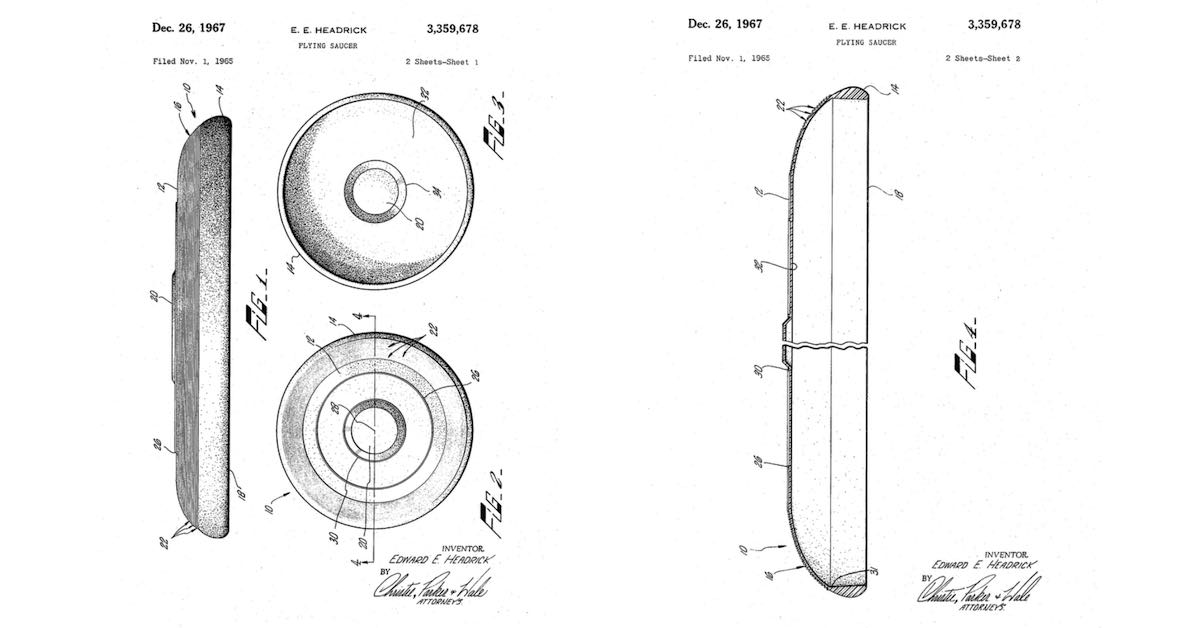
The person behind the modern Frisbee and the person who led the original grassroots efforts to establish disc golf as a popular sport are one and the same: the late Ed Headrick (1924-2002). He held various roles at Wham-O, including Executive Vice President, in the 1960s and '70s. 

Technical sketches of a flying disc
Images accompanying a patent application for the flying disc created by Ed Headrick that would become the modern Frisbee.

Before Headrick got involved with the project, Wham-O's Frisbees weren't selling particularly well, but he thought they could be a hit with just a few adjustments.

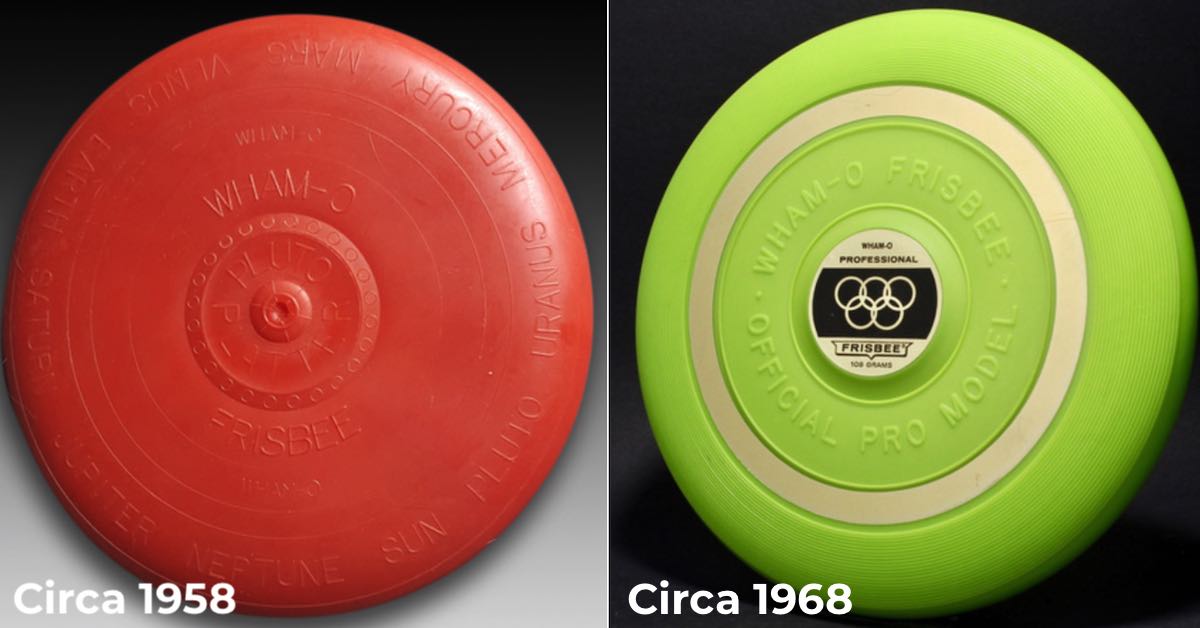
According to Kennedy, Headrick – with an eye toward making Frisbees seem more serious and adult – took off the names of planets that had ringed the edges of Pluto Platters, (illegally) used a label with Olympic rings, added a solid-colored band, and improved the discs' flight by slightly thickening the rim. He also incorportated small ridges he called 'flight rings' where the planets had been, but Kennedy says they didn't do much. Well, except earn Headrick a patent.

"Replacing the planet names with 'flight rings' did nothing for improved flight – contrary to the story Ed used to convince the Patent Office to grant him a new utility patent," Kennedy said.

Two Frisbees, one older, orange-ish Flying Saucer and another geen Pro model
Left: Wham-O Pluto Platter Frisbee. Right: Wham-O Pro Frisbee based on Headrick's designs. Photos courtesy of Lightnin' Lyle Jensen (Pluto Platter), Joe Essman (Wham-O Pro), and the Flying Disc Museum. These photos have been modified. Tap/click the disc names to see the original images in full resolution at the FDM.

Along with the changes, Headrick got Wham-O to heavily market Frisbees and promote their use in various new sports and skill challenges. This led to a wave of people picking up Frisbees (one source suggests 100 million were sold) and many getting interested in organized competitions involving them.

One of those competitions took the basic idea behind golf – trying to reach a distant target in as few attempts as possible – and adapted it for the Frisbee. Instead of hitting a ball, you threw a Frisbee. Instead of aiming for a hole, you picked a (typically vertical) target like a tree or lamp post.1

Though he played many other Frisbee sports, Headrick became fixated on the potential of Frisbee golf thanks to a number of early Frisbee enthusiasts (including the legendary co-inventor of disc golf's two-meter rule, Dan "Stork" Roddick) and the sport's warm reception at the Wham-O-sponsored 1975 World Frisbee Championships. True history buffs can find more on these topics in a post from the PDGA.

However, when Headrick asked Wham-O for permission to use their trademarked name to officially call a sport "Frisbee golf," the company declined. It's only conjecture, but it seems possible they were worried this use of "Frisbee" could dilute their trademark.

Whatever Wham-O's reasoning was, "Frisbee golf" wouldn't fly (pun very much intended), and Headrick had to think up something else – especially since he left his Executive VP role at Wham-O in 1975 to go all in on this new sport.

Why Is It Called Disc Golf?

Since Wham-O wouldn't allow Headrick to use its trademarked word "Frisbee," he opted to call the sport "disc golf" instead. That name gained traction thanks to Headrick's formation of both the company Disc Golf Association (today often just called DGA) and the Professional Disc Golf Association. Through the former, he sold flying discs, the world's first disc golf basket (which he invented and originally dubbed the "disc pole hole"), and courses (using his targets, naturally) across the nation. The latter was a membership-based group that is today the non-profit governing body of the sport.

wham-o-frisbee-disc-golf-set-1.jpg
At first disc golf was played with actual Frisbees, but even Wham-O was careful to call the sport "disc golf." Photo courtesy of Tom McManus and the Flying Disc Museum. This photo has been modified. Tap/click here to see the original image in full resolution at the FDM.

Thanks to those two entities, "disc golf" was established as the sport's official name and the go-to moniker to use for tournaments, events, and products related to it if you didn't want legal ramifications.

Why Do People Still Call It Frisbee Golf?

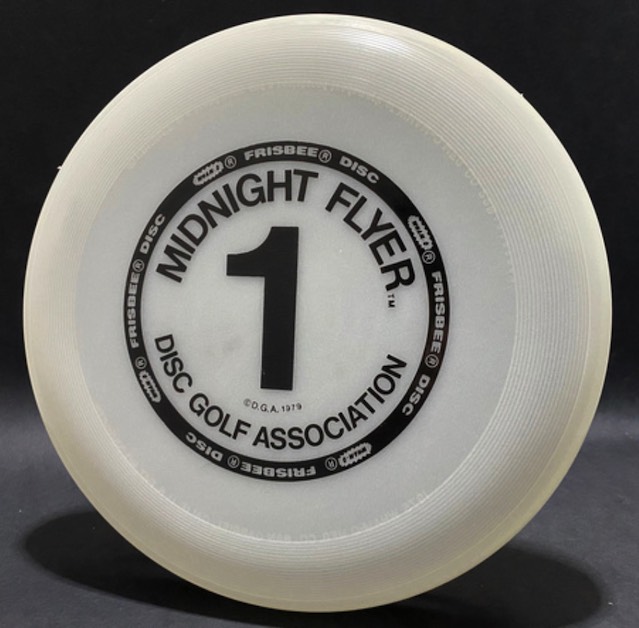
One reason is likely that, early on, disc golf was closely connected to actual Frisbees. Even though Headrick sold his discs for the sport under the Disc Golf Association name, they were still manufactured by Wham-O. In fact, "Frisbee" was prominently stamped on some DGA discs:

A white Frisbee with "Midnight Flyer" and "Disc Golf Association" printed on it
A DGA Midnight Flyer that also has the Frisbee trademark on it. This was produced in 1979, which was years after Headrick left Wham-O. Photo courtesy of Christopher Mattison, Robert Wright, and the Flying Disc Museum. This photos has been modified. Tap/click the disc name to see the original image in full resolution at the FDM.

However, the most obvious reason "Frisbee golf" didn't fade away entirely and may never do so is that Wham-O's flying discs were so successful that "Frisbee" now means any flying disc to many across the world. So even after non-DGA/Wham-O discs that varied greatly from Frisbees entered the sport (like the iconic Puppy and Super Puppy or the groundbreaking Eagle/Aero), many people still called them Frisbees and not "discs."

This genericization – the technical term for when a single product's name becomes synonymous with all versions of that product, e.g. Kleenex – means that no matter what those in-the-know call the game, when people see others throwing discs at targets, combining the two familiar words "Frisbee" and "golf" is a no-brainer. 

So, Is It Okay for Me to Say "Frisbee Golf"?

Wham-O's trademark doesn't apply outside the United States, and "Frisbee golf" is a common name for the sport in many places where it's popular. Just type "frisbeegolf" (intentionally combined) into our international disc golf course directory and you'll see tons of Finnish courses pop up as suggestions. In disc golf hot spots Iceland, Sweden, and Norway, "frisbee golf" (technically frisbígolf in Iceland) and "disc golf" are interchangeable.

A "frisbígolf" course map outdoors in Iceland
A sign at Hallormsstaðaskógur in Iceland. Photo uploaded to UDisc Courses by nesi13

Inside the U.S., plenty of people still say "Frisbee golf" or the portmanteau "Frolf," but it is frowned upon – or at the very least smirked at – by the majority of serious players. This is so true that we pretended we'd changed our company's name from UDisc to UFrolf last April Fools knowing the sort of stir and smiles such an announcement would create.

Ultimately, unless you're using "Frisbee golf" in any sort of official capacity inside the U.S., you're free to call the sport whatever you want with the worst repercussions being possible teasing or getting corrected.

Special Thanks

We want to extend special thanks to both prominent flying disc historian Phil Kennedy and former Wham-O employee, International Frisbee Association head, and World Flying Disc Federation head Dan 'Stork' Roddick for reviewing this post prior to publication. They helped us make sure the information above was as accurate as possible.

Additionally, this would be nowhere near as fun to look at without the great work being done by the Flying Disc Museum. Visit the FDM website to see flying discs (including disc golf discs) from across the decades, and you can read more about the organization's founding and missions in our post "A Growing Home Of Disc History: The Flying Disc Museum."

Want More Fun Looks at Disc Golf Topics?

This blog is dedicated to exploring all facets of disc golf and telling stories players across the world can enjoy and learn from. If you always want to know what we've been looking into lately, consider subscribing to UDisc's Release Point newsletter.


1. Using flying discs in a golf-like game definitely pre-dates Headrick's Frisbee (Kennedy said he made up 'Pluto Platter Golf' in 1957), but the game was played more widely following the release of the Headrick's Frisbee and the explosion of flying discs' popularity that followed.

geschätzte Lesezeit: 10 min

“Wer bin ich?” ist eine der großen Fragen des Lebens. Selbstfindung bzw. Selbsterkenntnis ist keine Erfindung der Neuzeit, sondern begegnet uns seit vielen Jahrhunderten in verschiedensten Facetten. Doch was versteht man unter der Frage “Wer bin ich?”

Du wirst hier keine Antwort erhalten, wer Du bist. Aber Du kannst Dir durch diesen Text bewusst werden, dass die Frage auf andere Weise beantwortet werden muss als mit einem plumpen Fragenkatalog über Deine Stärken, Interessen und Werte.

Wer bin ich?
Was versteht man unter "Wer bin ich?"Wo sitzt das Ich überhaupt? - im Körper oder irgendwo anders? Und wer ist dieses Ich?

Wer ist “Wer” und was ist “Ich”?

Die Frage nach der eigenen Identität, dem eigenen Selbst, zählt zusammen mit “Was ist der Sinn des Lebens?” zu den wichtigsten Themen im Leben eines Menschen.

  • Bin ich eine Seele, also Geist?

  • Oder bin ich mein Körper, also eine komplexe Verbindung von Molekülen?

  • Gibt es mich wirklich oder bin ich eine Illusion?

Wie alt das Sujet ist, zeigt die Überlieferung vom antiken Tempel des Apollon auf Delphi, den der altbekannte Weisheitsspruch zierte: "Erkenne dich selbst”. Sehr viel später wurde dann Descartes Ausspruch “Ich denke, also bin ich” maßgeblich. Einen Konsens gibt es bis heute nicht wirklich. Wenn Du Dir die Frage mal genauer ansiehst, dann verstehst Du auch, warum sie so schwer zu beantworten ist.

Was ist mit "Wer bin ich" gemeint?
  • Wer ist mit "Wer" gemeint? 

Du, jetzt in diesem Augenblick? Oder die Person, die Du in 20 Jahren sein wirst oder willst? Was genau macht eine Person aus und was nicht?

  • Wann ist "bin"? 

Dein Sein verändert sich mit Deinem Leben. Um welchen Zeitpunkt geht es? Letzte Woche, heute oder in 2 Jahren? 

  • Was ist "Ich"? 

Was für ein Sein ist dieses Ich? Bist Du Dein physischer Körper? Bildet sich Dein Ich aus Deinen Wünschen oder Erfahrungen? Wo ist dieses Ich?

Wer bin ich? – Test

47 Fragen als Anstoß zur Selbstreflexion

Wer sein Leben sinnvoll gestalten will, muss zunächst wissen, wo er oder sie steht. Kennst Du Deine Werte? Wie steht es um Dein Selbstbild? Was ist dir wirklich wichtig?

Mit dem kostenlosen Test kannst Du wichtige Selbsterkenntnisse gewinnen, wenn Du Dich ernsthaft mit den Fragen auseinandersetzt. » Zum Test: Wer bin ich?

Wer bin ich – und wenn ja, wie viele?

Die Frage “Wer bin ich?” wird heute inflationär gestellt. Dabei war das Thema rund 2000 Jahre für die meisten Menschen relativ klar: Ich habe ein "Ich" in mir, das der Welt gegenübersteht (Dualismus). Diese feste Überzeugung trauten sich nur wenige zu kritisieren (vgl. Spinoza, Hume).

Bewegung kam schließlich zum Ende des 19. Jahrhunderts in das Thema: Der Psychologe & Philosoph William James trennte das Ich vom Selbst.

  • Das Ich sei der dunkle Bewusstseinsstrom, mit der die Umwelt erfahren wird.

  • Das Selbst sei die Beurteilungszentrale, die diesen Bewusstseinsstrom deutet und wertet.

Spätestens aber seit Freud, der auf James aufbaute, gilt: “Der Mensch ist nicht Herr im eigenen Haus.” Das Ich wurde zum Es (dunkler Trieb), das Selbst zum Über-Ich. Dazwischen das echte Ich des Menschen.

Das Ich als Nebenphänomen

Von der modernen Hirnforschung wird die Existenz des Ich komplett verworfen. Alles nur ein geistiges Konstrukt, als Neben-Phänomen von physiologischen und neurobiologischen Prozessen.

Denn verschiedene Bestandteile des Ich (Zeitempfinden, Erinnerung, Körpergefühl etc.) spielen sich in verschiedenen Gehirnregionen ab (1). Neuere Untersuchungen sollen außerdem auf Ich-freie Erlebnisse verweisen (4).

Ganz so einfach ist die Frage nach dem Ich aber nicht beantwortet. Die Neurowissenschaften verwechseln Korrelationen mit Kausalitäten. Doch nur, weil sich das Ich neurobiologisch nicht an einem zentralen Areal festmachen lässt, bedeutet das längst nicht, dass kein Ich existiert.

Schließlich gibt es über 7 Milliarden Menschen auf dieser Welt, die wie selbstverständlich “ich” sagen und ein basales Selbstgefühl empfinden, das wesenhaft zu ihrer Person gehört.

Wer bin ich

Plutarchs Theseus-Paradoxon

Problem der doppelten Identität

Seele, Ich, Identität – welchen Begriff Du auch nimmst, es bleibt kompliziert. So kompliziert, dass der griechische Historiker Plutarch bereits in der Antike die Erzählung von Theseus' Schiff prägte und so die Schwierigkeit des “Wer bin ich?” aufzeigte (2).

Das Schiff des Theseus (auch Theseus-Paradoxon genannt) behandelt die Frage, ob ein Objekt seine Identität verliert, wenn einige Einzelteile oder sogar alle einzelnen Bestandteile erneuert oder ausgetauscht werden.

Hintergrund: Theseus gilt als mythischer Gründer und König von Athen. Er besiegte den Minotaurus auf Kreta und rettete Griechenland aus der jahrelangen Abhängigkeit von König Minos. Mit dem Schiff kehrte er zurück nach Athen.

Dieses geschichtliche Ereignis feierten die Athener jedes Jahr: Mit dem (angeblichen) Originalschiff des Theseus wurde die Reise nachgestellt. Gute 1000 Jahre lang. Natürlich kamen über diese Jahrhunderte auch Abnutzungserscheinungen auf, so dass immer wieder Teile des Schiffes repariert und ausgetauscht werden mussten.

Plutarch fragte sich: Wie kann jeder einzelne Teil einer Sache ersetzt werden und trotzdem bleibt es dasselbe?

Antwort 1

Einige würden sagen, es gab in 1000 Jahren nur ein Schiff des Theseus, und weil die Veränderungen allmählich vorgenommen wurden, hat es nie aufgehört, das legendäre Schiff zu sein. Selbst wenn das frühere und das “heutige” Schiff kein einziges gemeinsames Teil mehr besitzen. Also ist A gleich B.

Antwort 2

Andere aber könnten argumentieren, dass Theseus das Schiff B nie betreten habe, und dass seine Präsenz auf dem Schiff ein wesentliches qualitatives Merkmal darstelle. Obwohl die beiden Schiffe also zahlenmäßig gleich sind, sind sie qualitativ unterschiedlich. Deshalb ist A nicht gleich B. 

Antwort 3

Daneben lässt sich noch eine 3. Möglichkeit denken. Nehmen wir an, jemand sammelt alle Originalteile des Schiffes von Theseus, die ausgetauscht wurden, und baut sie wieder zu einem Schiff zusammen.

Jetzt gibt es 2 Schiffe zum gleichen Zeitpunkt: Dasjenige, welches Theseus nutzt, und das, welches aus den alten Originalteilen zusammengebaut wurde. Welches dürfte nun wirklich das Schiff von Theseus sein – das funktional oder materiell Gleiche?

Wie lassen sich Identität und Veränderung beim Menschen vereinbaren?

Übertragen auf den Menschen lassen sich verschiedene Schlüsse ziehen:

1) Materielle Gleichheit begründet Identität

In vielen Bereichen gilt: was aus gleichem besteht, ist das gleiche. Aber wie ist es dann, wenn materielle Teile Deines Körpers ausgetauscht werden, zum Beispiel wegen einer Organtransplantation - bist Du dann nicht mehr Du?

Oder nehmen wir die Veränderung des Äußeren über die Zeit: Macht Dich das Altern, während dem Zellen absterben und teilweise erneuert werden, zu jemand gänzlich anderen?

2) Funktionalität als Basis für Identität

Wir könnten auch voraussetzen, dass es nicht auf das Material, sondern die Funktion ankommt. Solange Du eine funktionelle Einheit (“So-Sein”) bildest und bleibst, bist Du ein spezifisches Ich. Völlig egal, wie sehr Du Dich körperlich oder geistig veränderst.

Unterschied: Konstitution vs. Identität

Wesentlich für die Frage “Wer bin ich” ist daher die Unterscheidung zwischen dem Aufbau eines Menschen und den notwendigen Bedingungen, damit seine Existenz weiter bestehen kann.

Kurzum: Es macht einen Unterschied, ob ich nur das Material betrachte (Konstitution), aus dem etwas besteht, oder ob ich nach einem funktionellen Wesensmerkmal frage (Identität).

Selbst wenn sich die Körperzellen eines Menschen über sein ganzes Leben hindurch erneuern, so ist es doch immer der gleiche Mensch: eine bestimmtes Sein - nicht irgendein oder irgendwer anderes.

Woher weiß ich, dass ich ein Ich bin?

Nach interdisziplinärem Wissensstand geht man davon aus, dass jeder Mensch ein grundlegendes Selbstgefühl besitzt, das sich aus folgenden Facetten bildet:

  1. Ich empfinde meine eigenen Körperteile als zu mir gehörig

  2. Ich habe das Gefühl, selbstverantwortlicher Urheber meiner Handlungen zu sein

  3. Ich erfahre die Welt, deren Zentrum ich bilde und von dem aus ich mir die Welt erschließe 

  4. Ich erkenne mich selbst als Objekt im Spiegel und kann mich von anderen unterscheiden

  5. Ich kann mein eigenes Wissen vom Wissen anderer Personen unterscheiden und mich in andere hineinversetzen (Empathie, Zwischenmenschlichkeit)

Wer du nicht bist

  • Deine Schwächen oder Stärken

  • Deine Werte oder Ziele

  • Deine Erziehung oder Erfahrung

  • Deine Bedürfnisse oder Wünsche

  • Dein Körper oder Geist

  • Deine Eigenschaften oder Attribute

  • Deine Gewohnheiten oder Interessen

  • Deine Gedanken oder Gefühle

  • Dein Besitz bzw. materielles Gut

Descartes – Ich bin Geist

Was ist das Ich?

Der Philosoph René Descartes (1596 – 1650) formulierte das berühmte "Cogito"-Argument: Ich denke, also bin ich. Im einfachsten Sinne bedeutet der Satz: Wenn ich denke, muss es mich wirklich geben. Weiterhin argumentiert Descartes über die Vorstellungskraft: Meine Nicht-Existenz kann ich mir nicht vorstellen, aber ich kann mir vorstellen, ohne Körper zu sein. Das denkende Ich ist also reiner Geist. 

Das Problem: Sind Geist und Welt denn wirklich getrennte Entitäten? Gerade die Psychosomatik zeigt, dass ein Subjekt untrennbar an den Leib gebunden ist. Und auch ich selbst erlebe mich als wesenhafte Einheit.

Wittgenstein – Ich bin ein sprachliches Konstrukt

Wittgenstein (1889 – 1951) war ganz anderer Meinung als die Nachfolger Descartes´. "Ich bin meine Welt", schreibt er im "Tractatus logico-philosophicus". Wittgenstein verstand das Ich als sprachliches Konstrukt. 

Die Frage “Wer bin ich?” ist ein Sprachspiel. Der Ausdruck "ich habe Schmerzen" ließe sich einfach mit “Aua” beschreiben. Das Wort “Ich” sagt in diesem Satz also nichts aus, sondern sei Ausdruck einer Empfindung.

Das Problem: Sein Vergleich weist einen großen Logikfehler auf: der Ausruf “Aua” enthält eine andere Bedeutung als die Aussage “Ich habe Schmerzen.”

Noch wichtiger: Lässt sich eine sprachliche Regelung einfach so auf die Struktur von Welt oder Geist übertragen?

Neurowissenschaften – Ich bin eine Illusion 

Da die Hirnforschung in Zeiten einer positivistischen Wissenschaft vom biologische System Gehirn ausgehen, hat sich inzwischen die Meinung verbreitet, dass Ich sei nur eine Fiktion neurobiologischer Prozesse. Hier ist natürlich auch ein Dualismus vorausgesetzt: die Trennung von Wirklichkeit und Gehirn-Ich, das sich die Welt als mentale Repräsentation erzeugt.

Auch das ist allerdings eine hoch umstrittene Annahme, die nur unter reduktionistischen und materialistischen Voraussetzungen Sinn macht.

“Das Selbst ist kein Objekt, das schon da ist, um gefunden zu werden”
— Taylor

Neuere Philosophie –  Ich bin real

Unter Berücksichtigung psychologischer und neurowissenschaftlicher Ergebnisse kommt die neue Phänomenologie auf ganz andere Schlüsse über das Selbst (5) als die empirischen Wissenschaften.

Die Selbsterfahrung gründet auf einer ich-bezogenen Einheit des Erlebens. Ein basales Selbsterleben, das sich in der Ich-Perspektive (1.-Person-Perspektive) ausdrückt. Darüber hinaus bezeichnet das Selbst aber auch eine Persönlichkeit, die trotz aller Wandlungen und Umbrüche des Lebens konstant bleibt.

Was von der Antike bis ins 19. Jahrhundert als Seele begriffen wurde, bezeichnete man später als Ich. Während Freud noch von einem Über-Ich sprach oder Husserl über ein Ich-Zentrum philosophierte, nutzen heutige Autoren lieber den Begriff des Selbst.

Anstelle eines selbstbewussten, stetigen und souveränen Ichs ist ein vielschichtiges, sich langsam entfaltendes Selbst getreten, das erst sein Ich-Bewusstsein erwerben muss.

Selbstsein ist kein Konstrukt

Wer das Ich betont, weist außerdem auf die Grenze zum Du hin, auf die Abgrenzung zum Anderen. Genau das ist nach philosophisch-phänomenologischer Theorie nicht die richtige Ausgangslage. Das Selbst ist zwar für sich, doch immer bezogen auf die anderen.

Das ist ein wesentlicher Unterschied zu früheren Vorstellungen des Selbst als einzelnes, abgegrenztes Ich-Bewusstsein.

Ein Selbst befindet sich vor jeder Wahrnehmung bereits in einem Feld aus leiblichen und sprachlichen Beziehungen zu anderen Menschen. Dass es andere Menschen gibt, brauche ich mir nicht zu denken. Mir ist dieses Wissen unmittelbar gegeben.

“Selbstsein ist kein Konstrukt, sondern unsere jeweils grundlegende Realität” (Fuchs)

Das Selbst ist eben nicht eine konsistente Substanz, sondern eine prozesshafte Einheit des Selbsterlebens. Kein geistiges Konstrukt, sondern eine präreflexive Basis der Identität.

Ebenso wie ich in meiner Wahrnehmung die Existenz und Sichtweise der anderen vorweg nehme, genauso gibt es eine wesenhafte Selbsthaftigkeit. Eine basale Vorstufe des Bewusstseins darüber, dass mir ganz allein diese Erfahrungen, Handlungen, Gedanken und Gefühle angehören und nicht einem anderen Menschen. 

Das Selbsterleben umfasst dabei die Erfahrungshorizonte der Leiblichkeit und Zeitlichkeit. Ich bin mir selbst gegenwärtig in Form von einer leiblichen Selbsterfahrung. Doch ich erfahre auch mein Dasein &  Bewusstsein in einem zeitlichen Zusammenhang, der konstitutiv für das Selbst ist.

Gleichzeitig benötigt ein Selbst auch soziale Kontake, um sich über zwischenleibliche Resonanzen zu einem Selbst auszubilden.

Das Selbstbewusstsein steht durch Kultur, Gesellschaft, Milieu immer in einer Beziehung zu anderen, denn auch angeeignete Fähigkeiten, Stile oder Rollen fließen ins Selbstgefühl mit ein.

Es gibt noch eine weitere Dimension, die einen notwendigen Bestandteil des Selbst bildet: die narrative Identität.

In der sprachlichen Interaktion und im Erzählen verbindet der Mensch seine Erfahrungen zu einer Lebensgeschichte. Allerdings spielt dabei nicht nur die Vergangenheit eine Rolle, sondern auch das Selbstkonzept, also das Wissen über meine persönlichen Eigenarten und Eigenschaften.

Das Selbst in der Philosophie

Die Frage "Wer bin ich?" kann also nur auf einen Moment bezogen werden.

Mit Jaspers gesprochen, lautet die Antwort: Du bist Weg.

Du bist im Prozess.

Nach der eigenen Identität bzw. dem eigenen Selbst zu fragen ist eine Momentaufnahme, die Dich unter einer bestimmten Perspektive zu einem bestimmten Augenblick zeigt.

Deswegen ist die Frage aber nicht weniger wertvoll, hilfreich oder sinnvoll. Wichtig ist nur, die Identitätsproblematik in ihrem Umfang zu erfassen und die eigenen Vorannahmen zu reflektieren. » Hier geht's zum Test: Wer bin ich?

Quellen:

1) Albert Newen: Wer bin ich? In: Spektrum - Die Woche: 7. KW, 2011
2) Plutarch, Vita Thesei 23, Übersetzung von Wilhelm K. Essler, in: Was ist und zu welchem Ende betreibt man Metaphysik?, Dialectica 49 (1995), 281-315
3) Richard David Precht: Wer bin ich - und wenn ja, wie viele? Eine philosophische Reise, Goldmann Verlag, 2007
4) R. Millière u. A. Newen: Selfless memories. In: Erkenntnis, 2022, DOI: 10.1007/s10670-022-00562-6 
5) T. Fuchs: Selbsterleben und Selbststörungen. In: Selbst und Selbststörungen. Schriftenreihe der DGAP, Bd. 3, S. 31-65. Hrsg. v. Thomas Fuchs und Thiemo Breyer, Verlag Karl Alber, 2020