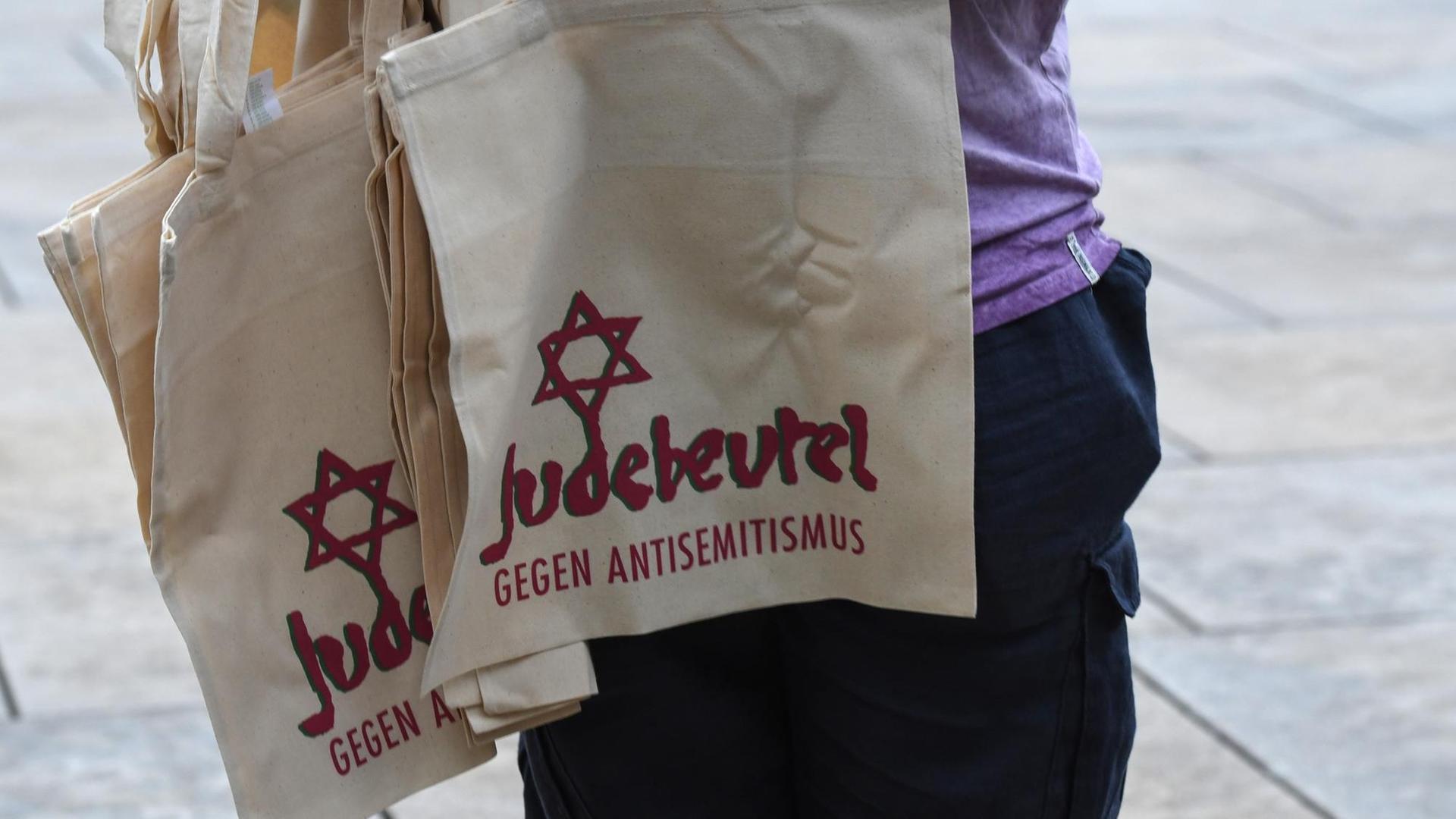
Das Judentum ist ein lebendiger Teil der deutschen Kultur (imago images/Winfried Rothermel)
Kölns Oberbürgermeisterin Henriette Reker twittert. Vor einigen Monaten bezeichnete sie eine Demonstration gegen die Corona-Schutzmaßnahmen als – Zitat - "verschwörungstheoretische und rechtsextreme Mischpoke". Die Frage ist, wer sich danach angegriffen fühlen konnte – allein die Verschwörungsgläubigen oder Jüdinnen und Juden? Das Wort Mischpoke bedeutete im Jiddischen, das vor 100 Jahren noch 10 Millionen Menschen weltweit gesprochen hatten, einfach Familie - "mischpoche". Ganz wertneutral. Weder positiv, noch negativ. Eingedeutscht bekommt es einen düsteren Beiklang, eine Anrüchigkeit, wie eine verschworene Gemeinschaft. Der Journalist Ronen Steinke hat über offen und verdeckt judenfeindliche Wörter und Redewendungen ein Buch geschrieben. Mischpoke kommt darin auch vor:
"Es ist also ein Bedeutungswandel. Wenn man heute von Mischpoke spricht im Deutschen, hat es immer etwas Sinistres, Dubioses, entweder ein korrupter Zusammenhang oder irgendwie eine dunkle Seilschaft. Und dieser Bedeutungswandel ist nur dadurch zu erklären, dass ein gewisses Bild von Jüdinnen und Juden abgefärbt hat auf dieses Wort. Dieser Bedeutungswandel ist etwas, was antisemitisch ist. Deswegen von dem Wort Mischpoke in der Verwendung als irgendwie Negativ-Wort sollte man Abstand nehmen, um nicht dieses antisemitische Bild, dieses Stereotyp zu nähren und zu affirmieren."
"Geschacher" und "Mauschelei"
Ein anderes Beispiel ist das Wort Schachern. Im Buch schreibt Ronen Steinke:
"Geschacher um Ministerposten, so liest man manchmal. Gemeint ist übles, feilschendes Geschäftemachen. Es kommt vom Jiddischen sachern. Sachern bedeutet im Jiddischen ganz einfach Handel treiben, ohne jeden abwertenden Unterton. Abwertend wird es erst im deutschen Gebrauch als Lehnwort. Nicht der lexikalische Inhalt, sondern allein die jiddische Herkunft sorgt für eine negative Deutung dieses ansonsten wertneutralen Wortes. Die deutsche Sprache macht daraus 'handeln wie ein Jude'."
Und das Ressentiment gegenüber jüdischen Händlern beinhaltete so etwas wie "unlauterer, profitsüchtiger Handel". Je mehr man von diesem Bedeutungswandel erfährt, umso gruseliger wird einem bei der Lektüre. Viele Prägungen stammen noch aus der Zeit vor dem 19. Jahrhundert, wo das Wort Antijudaismus noch nicht erfunden war, aber in der Sprache durchaus anwesend ist. Bei dem Wort Mauscheln beispielsweise erschließt sich der Zusammenhang nicht sofort.
"Das Wort Mauscheln kommt ja heute häufig vor in den Medien: Mauschelei bei der Banken-Fusion oder Mauschelei im Gemeinderat fehlt in keiner Lokalzeitung als Schlagzeile. Das kommt historisch daher, dass der jüdische Vorname Moses oder Mosche - oder Mauschel im deutschen Sprachraum -, der hergenommen wurde als pars pro toto, Name für alle Juden, so ähnlich wie Ali auch in rassistischer Absicht für Türken verwendet wird."
Ronen Steinke will ein Bewusstsein für Ressentiments in unserer Sprache schaffen (imago/Uwe Steinert)
Der Mauschel, das war also der Jude. Und das Verb mauscheln sollte ausdrücken, dass jemand wie ein Jude redet. Und zwar negativ. Nichts anderes bedeutet dieses Wort bis heute. Abgeleitet von einem Spottnamen für Juden.
"Man mag es vielleicht mit der Intention verwenden, die vollkommen unschuldig ist, dass man ausdrücken möchte, hier werden irgendwie korrupte Dinge besprochen, hinter vorgehaltener Hand im Gemeinderat oder wie auch immer. Aber man greift damit ein altes antisemitisches Klischee auf und verbreitet es weiter."
"Diese Sprechweise ist toxisch"
Ronen Steinke geht es nicht darum, Wörter zu verbieten. Es geht ihm um Aufklärung. Natürlich kann es nicht jeder wissen, wovon sich die verschiedenen jüdischen Begriffe ableiten. Manche seien ja auch ganz charmant: "Meschugge" zum Beispiel für "nicht ganz bei Verstand sein" oder "verrückt werden". Oder "Masel tov" für "Glückwunsch". Aber würde man heute noch von einem "Halbjuden" sprechen, einem Begriff aus der Rassenlehre der Nationalsozialisten. Oder von einem "Judenfriedhof"? Klarer wird das Vorgehen, wenn man es auf andere Religionen anwendet.
"Würde man denn von einem Katholikenfriedhof sprechen? Würde jemand von einem Katholenfriedhof sprechen? Das würde dann doch sofort aufstoßen als eine seltsame, ein bisschen respektlose Formulierung. Der Judenfriedhof ist genau dasselbe. Kein jüdischer Mensch würde selber so von dem Friedhof für seine Großeltern sprechen. Menschen, die von Juden nichts halten, sprechen so. Diese Sprechweise, die in der NS-Zeit ganz populär gemacht worden ist, Judenfriedhof, Judenschule, Judenmusik, Judenliteratur, diese Sprechweise, das ist natürlich toxisch."
Mosaisch? Gut gemeint, aber nicht gut
Die Ausgrenzung von Juden in der deutschen Geschichte ist bekannt. Juden wurden in früheren Jahrhunderten herkömmliche Berufe verboten, sie waren auf den Handel, auch mit Geld, festgelegt. Wenn es Missernten gab, wurden sie als angeblich Schuldige ausgemacht. Ein klares Feindbild. Aber es gab auch gut gemeinte Versuche, die Ausgrenzung von Juden aufzubrechen, ihnen auf Augenhöhe zu begegnen. Es wurden Synonyme gesucht für das arg belastete Adjektiv "jüdisch". "Mosaisch" ist so ein Versuch. Leider geht dieser Begriff für die jüdische Religion völlig am Selbstverständnis der Juden vorbei.
"'Mosaisch' zum Beispiel ist im 19. Jahrhundert geprägt worden, bewusst als neues, unbelastetes, irgendwie leichtherzigeres Wort anstelle von 'jüdisch'. 'Jüdisch' war damals schon sehr belastet, zu toxisch, einfach als Schimpfwort zu oft verwendet worden. Die Intention bei 'mosaisch' ist eigentlich eine gute gewesen. Man wollte sozusagen betonen, dass das Judentum ähnlich wie das Christentum auf einer Stufe steht. Und man hat, so wie das Christentum seinen Namen von seinem Religionsstifter Christus her bezieht, hat man gesagt: Na, dann nimmt man halt den Religionsstifter des Judentums, also Moses, den aus jüdischer Sicht letzten Propheten und bezeichnet dann die Religion in Anlehnung daran."
Antijudaismus - Alttestamentlich contra alttestamentarisch Der Begriff "alttestamentarisch" wird oft unreflektiert gebraucht, wenn das Alte Testament gemeint ist. Dabei plädieren Theologen schon lange dafür, stattdessen "alttestamentlich" zu verwenden.
Das Problem daran ist, dass es natürlich eine christliche Sichtweise ist. Juden begreifen sich nicht als diejenigen, die Moses als Gottes Sohn oder Religionsstifter verehren, sondern sie sehen etwas anderes im Zentrum ihres Glaubens.
"Und ähnlich wie Muslime auch mit Mohammedaner nicht respektvoll bezeichnet sind. Das ist der Versuch, aus dezidiert christlicher Sicht andere Religionen in ein Schema zu pressen. Und das beinhaltet ja auch ein bisschen die Annahme, es gäbe nichts Schöneres und keine größere Ehre für eine andere Religion, als wenn man sie dem christlichen sozusagen Normalmaß angleichen würde. So ist es nicht. Aus jüdischer oder aus muslimischer Sicht: Nö."
Das Judentum ist Teil unserer Kultur
Wenn sich Ronen Steinke etwas wünschen könnte, dann wäre es, dass Jüdinnen und Juden nicht nur als Opfer und Betroffene mörderischer Gewalt wahrgenommen werden. Das Judentum kann in Deutschland immerhin auf 1700 Jahre Präsenz zurückblicken.
"Noch viel zu selten bequemt sich die Mehrheitsgesellschaft, auch mal die Augen zu öffnen für die vielen, vielen Beiträge jüdischer Menschen zur deutschen Kultur. Es gibt länger deutsches jüdisches Leben als es christliches Leben gibt in Deutschland. Und dementsprechend lang und vielfältig sind die Beiträge zu allem, was wir als deutsche Kultur betrachten. Das immer zu reduzieren auf Holocaust und auf Schtetl und auf Ghettos, das wird überhaupt nicht dem Judentum gerecht. Es ist auch Teil des Problems, dass Juden heute diskriminiert werden."
Ronen Steinke: "Antisemitismus in der Sprache" Duden Verlag, 2020, 64 Seiten, 8,30 Euro
Non-profit organisations handle sensitive information on a daily basis, from donor information to project details. Protecting this sensitive information is a critical part of operations. Having the right password manager in place can help NGOs keep data secure and manageable, which allows your organisation to focus on it’s mission.
Passbolt has a mission of its own — to make password management easy to use, affordable and, most importantly, secure. Nobody, especially an NGO, should have to compromise on security or cooperation. Feel empowered to protect your data by using the right tools for the job.
NGOs vs. Password Security: Winning Combination
“Having a centrally managed and secure password manager system can take the pressure off of an IT team, meaning that major vulnerabilities can be avoided and infosecurity threats will decrease.” — Cliodhna Kirk, IT Team Lead at Greenpeace
When it comes to cybersecurity and password management, NGOs face some unique challenges. To start, organisations need to securely share passwords with coworkers, sometimes volunteers, and maybe even stakeholders. With multiple accounts to manage, things can quickly get overwhelming. And that’s not even mentioning accessing controls or password audits.
Regular audits of passwords and accounts can be time consuming when performed manually. Without a centralised password management system, there’s no good way to keep track of all your passwords. Organisations with multiple accounts and users might struggle with providing access or monitoring who can view sensitive information.
An NGOs guide for choosing the right password manager
Finding the right tool for your non-profit organisation can be a lot of work, especially if you don’t know what to look for or where to start. There are many password management tools on the market and not all of them might meet the values of your organisation.
The first thing to consider, of course, is security. When choosing a secure solution for your NGO, make sure the password manager uses advanced encryption techniques and has a strong security track record. Look for further security enhancements like 2FA and a customizable password generator. And try to find a platform that doesn’t have a single point of failure.
It’s also important to find a password manager that’s easy for all of your team members to use and navigate. There should be a support team, forum, and documentation that can help if you get caught up in any part of use. There’s no replacement for good customer support.
“One of the main challenges that we faced whilst adopting a password manager was changing the culture around password management: people need to change how they work with and store their passwords. Similar to any IT tooling implementation, what stood out as being important was having clear guidance, communication on the ‘why this is needed’ and training was required in order to get as many people to engage with the tool. Educating users is a fundamental part to mitigating challenges as it’s important for users to understand why they can’t simply store their passwords in an excel file in plain text.” — Cliodhna Kirk, IT Team Lead at Greenpeace
Not every team member uses the same computers or phones so finding a solution that works for everyone is important. It should work seamlessly across different devices, browsers, and operating systems. A solution limited by the technology your team uses can really hamper the collaboration and access abilities within your organisation.
Choosing a password management system that offers multi-user access is crucial for an NGO with a team that needs access to certain accounts. Access to sensitive information such as donor details, financial records, and confidential communications needs to be stored in a system that’s secure but easily accessible to those who need it. Multi-user access lets more than one person access credentials. Without it, your organisation might have trouble working together safely.
Find one with audit logs and reporting for access. Some password managers provide alerts, set expirations, and keep a log of users who have accessed any given item. Auditing and reporting provides an extra layer of accountability and can help NGOs identify any suspicious activity or attempted breaches.
You’ll also need to consider the cost of the password manager. Security is paramount, but finding a solution that fits within your organisation’s budget is also a big deal. Look for a provider that has flexible pricing plans and discounts for NGOs.
When your organisation is choosing a password manager, the NGOs mission and values should align with the company’s. Choosing a company that aligns, ensures that your organisation is protecting its sensitive information while maintaining integrity, working towards your vision, and keeping a clear identity. A tool can often become an extension of your organisation, having one you trust and align with is crucial.
Implementing A Password Manager
Start by defining the scope of your project. Work out exactly what your organisation is trying to achieve with a password manager. Once you’ve identified this, decide what features you need to make it happen. Then find a solution that meets your needs. To make this process easier, you may need to set up a team. A group of tech-savvy, security-conscious people from your organisation. This team can help research solutions, implement the tool, and train the rest of the organisation to use it.
Then it’s important to identify any risks associated. You don’t want your password management tool to become the Achilles’ heel of your organisation’s cybersecurity. Make sure you identify any potential risks and develop a plan to mitigate them. It’s also important to make sure everyone on the team knows what they’re supposed to be doing. Assign roles and responsibilities to keep things aligned and help everyone understand their tasks.
Once you’ve made a decision, set a timeline. Give your team a realistic deadline for implementing a password manager. Make sure everyone is aware of it, so there are no surprises when you’re setting out. Keeping everyone in your organisation informed about what’s going will make the process easier. Tell you employees, volunteers, and stakeholders; they’ll probably be happy to hear what’s being done to protect their sensitive data.
Now you might feel ready to roll out the password manager. But, you should always test it first — after all, you don’t want to be the organisation that accidentally leaks all your donor information because you forgot to test your password manager. Now that you’ve done a run-through, you’re finally ready, but is your team?
It’s time to train your users on how to use the solution effectively and securely. Have some documentation ready or refer to the tool’s documentation. Well-educated users are your best line of defence against cyber attacks. Of course, you can monitor the use of the password manager and identify any issues that need improvement.
Take a look at how the rollout of the new password manager went, review it and see if there are any areas that need improvement. Make notes of the process and don’t forget to refine it as needed. You’ll never know when you’ll need to roll out another tool.
Secure Your NGOs data
It shouldn’t be a challenge to keep your organisation’s data secure. Implementing a password manager can make it easier. For organisations in need of a customisable password manager that puts security and collaboration at the forefront, look no further than Passbolt. It’s a low-cost, open source solution. Get started today with a free trial or contact us about the non-profit discount.