Article note: "Es ist eine berechtigte Angst, als migrantische Person, einen Polizeieinsatz nicht zu überleben." (Polizeiwissenschaftler Alexander Bosch) #omg! #brd2022
Nach dem blutigen Polizeieinsatz in Dortmund fragen viele nach der Verhältnismäßigkeit des Einsatzes. Die Bodycams waren ausgeschaltet.
Über dieses sonderbare Völkchen gibt es einiges zu erzählen.
Ein Freund von mir gab mir den Tipp, Telepolis meine artikel anzubieten. Telepolis? Is das ein TV-kanal für polizisten, in dem es zum Beispiel eine Morgensendung gibt mit dem Titel "Wie füll ich einen Strafzettel aus?". Spass beiseite, ich kontaktierte sie und sie boten mir an, artikel über meine Begegnungen mit Deutschland und den Deutschen zu schreiben. Ja, dachte ich mir, warum nich? Über dieses sonderbare Völkchen gibt es ja einiges zu erzählen.
Katarinisch
Ich werde mit meinen ersten Erfahrungen mit Deutschen anfangen, das war lange her und sehr weit von hier. Und zwar dort wo die affen toben und die Tapire tanzen, in Brasilien. Deshalb wird auch die Sprache immer etwas katarinischer.
Katarinisch is wie die bösen Zungen in Brasilien das Deutsche in Brasilien nennen, es heisst so weil der Bundesstat Santa Catarina proportional die meisten Deutschstämmigen hat, ungefähr die Hälfte der Population.
Katarinisch is ein simplifiziertes Deutsch, stark mit portugiesischen Wörtern gespickt, und oft is die Mischung mit Dialekten, vor allem Schwäbisch, Mosel-, Rheinfränkisch vom Südwesten und Pommernplatt vom Nordosten. Für Hunsrückisch [1] gibt es sogar eine brasilianische Orthografie, das wollen wir aba keinem Leser in Deutschland zumuten. Trotzdem, ein bisschen Dialekt bringen wir schon, natürlich im progressiven Modus, damit sich der Leser langsam dran gewöhnen kann.
Wenn er in Litauen geblieben wär
Er kam, kam und ging. Lange Zeit blieb sie an der Türschwelle stehen, die augen dorthin gerichtet, wo die Straße a Kurva macht und ins litauische Hinterland verschwindet. 9 Monate später erkannte sie, dass er etwas bei ihr gelassen hatte. Der Junge wurde zum Mann und zeugte unter anderem meinen Uropa.
Der wurde bekehrt, vorher war er Katholik, danach gläubiger baptist. Das hat mein Leben ziemlich verändert - mein Uropa wäre sonst nie auf den Gedanken gekommen, in em Städtchen mit quadratischen Gärten und gothischer Kirche im Süden Brasiliens a Stelle als Pastor anzunehmen. Wenn er in Litauen geblieben wär, wär ich ein Litauer und würde auf die Russen schimpfen. In Brasilien kann man das auch tun, aber es nützt nicht viel.
Der Uropa erzeugte unter anderem mein Opa, der auch gröszer wurde und heiratete. Meine Oma war wie mein Opa a bisschen langsam, was vielleicht daran lag, dass ich die beiden erst kennenlernte, als sie shon 80 waren. Die Oma hatte a brasilianishe Identitatscarta, war aba Enkelin von Deutshen - us Lodz, wohlbemerkt. Sie konnte bestenfalls dankeshön uf brasilianish sagen. Ihr Mädchenname war Schmidtke, a sehr popularer Indianername. Da meine Groszeltern streng religiös waren, wurde uf dem buernhof weder gesoffen noch geraucht. Angebaut wurde hauptsachlich Tabak.
Von Deutschland nach Polen
Die Familie zieht von Deutshland naach Polen, die sprechen äber weider deutsh un nennen sich deutshe, dann ziehen sie naach Brasilien un behaupten immer noch dass sie deutshe sin, un shwätzen entsprechend. Ja, un dieses Volk beshwert sich jetz, dass sich andere Völker in Deutshland nicht integrieren können.
Von der Mudderseid waren die Vorfahren Russen, kaum einer von ihnen hat einen natürlichen dod gehat. Ausserdeem waren vile in der Familie meiner Mutter Russland-deutshe. So is meine Verwantshaft nicht wirklich deutsh, hat aba vil mid der deutshen Kultur ze dun gehat. Und in Südbrasilien war alles noch vil deutsher - keiner hat uf der strasz Russish odder Litauish geredet, es hat einfach nicht genug davon gegeben.
Aber deutshe gab es je-de men-ge. In der Stadd von meinem Vater war alles sehr deutsh, in der Stadd von meiner Mudder hat es vor allem Polen un Italiener gegeben, aber im Vorort, wo sie gewohnt hat, war die Mehrheit deutshstemmig. Italiener gab es noch vil mehr - die määsten Italienishstemmigen ausser Italien leben in Brasilien. Sie haben ihr Italienish immer mehr aportugisirt, bis nur noch ein par italienishe Werter übrig bliben, die sich dann teilweise auch in der portugisishen Sprache etablirt haben.
So kannte ich als Kind nich nur brasilianishe Merchen und Musik, sondern auch Max und Moritz, Peter Alexander und deutshe Weihnachtslider. Die deutshstemmigen brasilianer sehn 'brasilianer' als Substantiv, und 'deutshe' als adjektiv: das is eine Sorte brasilianer. Die deutshen brasilianer. Oder einfach die deutshen. Werend die deutshen aus Deutshland die deutshländer sind.
Deutsche in Brasilien
Vile Leud glauben, deutshe en Brasilien send gflüchtete Nazis. Natürlich hat es die auch gegeben, aber deutshe waren schon Jahrhunderte vor den Nazis in Brasilien, der erste kam schon mit den ersten portugisishen caravelas.
Nach den USA war Brasilien das wichtigste einwanderungsland für die deutshen. Naach em 2. Weltkrig is shon wider a grosze Well deutshe kommen, meist Wirtschaftsflüchtlinge. Dass vile Nazis dabei waren, liegt auf der Hand - vile deutshe waren Nazis, wenigstens so lang Deutshland noch nich verloren hatte.
So het een (man) ein spaldenes bild von den deutshen in Brasilien: auf der einen Seite dei deutshstammigen in Brasilien, sie werden alemães batata nannt, Kartoffeldeutshe. "Polacos" get auch. In iren Städten sit es sauberer aus, der Wolstand is greszer und ansonsten sind sie ganz normale, feuchtfreliche Nachbarn. Sie feiern dauernd ire Kirmessen, und das zweitgreszte Oktoberfest der Welt is in Blumenau, Brasilien.
Uf der andren Sid hebben dei brasilianer vele americanishe Krigsfilme seen, un wenn sie an deutshe in der Weld denken, dann sind sie blond, dick, blauäugig, kald un grusam. Ir Liblingswort is VERBOTEN!, und sie schrein gern EINS, ZWEI, DREI, ACHTUNG! Dabei schrein dei brasilianer vil lauter und efter als dei deutshen, in Deutshland würde man sofort dei Polizei wegen Ruhesterung rufen. In Brasilien kann man auch dei Polizei rufen, aber bis die kommt, is der Schreier schon schlafen gegangen. Ich heb shon immer dei bilder von den filmen misstrut, aber nich ganz - wo so vil Rauch is, muss auch irgendwo feuer sein...
De americaner han inzwishen andre fäinde fir ire filme gefunden, wi Russen un araber, un so shwecheln de clischees iber de deetshen. Aber nich alle: sie sind vileicht nich mer so grausam, aber immer noch kalt und perfeccionista.
Ja, das sind sie: meine Telefonleitung ging nich mer, ich wollte die Telekom anrufen aber da war schon ein Schreiben im briefkasten: "Wir müssen Ihren Anschluss sperren, weil wir keine Adresse von Ihnen haben".
Das shikt de Deetshe Telekom. An mein adress.
URL dieses Artikels: https://www.heise.de/-7219686
Links in diesem Artikel: [1] https://www.faz.net/aktuell/stil/leib-seele/dialekt-hunsrueckisch-wird-in-brasilien-erforscht-16279969.html
Judging by the social media reaction to Nikko Locastro’s nine-month suspension from disc golf, I realize that making a public argument in his defense may be a fool’s errand. As that fool, I humbly request your consideration that disc golf’s recent growth has changed how appropriate some of the administrative systems and policies are in the professional era. In the case of Nikko, the disciplinary process that seemed perfectly reasonable and functional only a few years ago is now archaic and heavy-handed.
The PDGA did a lot right in this situation. The disciplinary committee acted expeditiously, followed the rules as written, and applied discretion in sentencing. They respected the privacy of everyone involved per their internal policy and, alongside the ruling, released a public reminder with links to the competition manual, the official rules, the disciplinary policy and process, and a list of current disciplinary cases. The Disciplinary Committee produced a result that was a clear rebuke of Nikko’s grossly inappropriate behavior.
To reiterate, Nikko’s actions were wrong, and I am glad the PDGA reached a decision that unambiguously communicated behavior like it is not welcome in disc golf.
However, the PDGA disciplinary process is not equipped to equitably administer punishments to the touring professional class of members. Nikko is being punished under a policy that has drastically different consequences for different membership classes that commit similar actions. On paper, the punishments are the same, but this understates the real-world impacts of the rulings.
If I behaved in a similar manner, a 9-to-24 month suspension feels appropriate — especially since suspension is the only tool the organization would have to punish me. The PDGA has no ability to enforce a fine on me or disrupt my income. I love the competition and would miss it dearly, but I’d still have my livelihood and my work relationships: the consequences wouldn’t bleed into every aspect of my life. The deliberations of the Disciplinary Committee are not public, and the Committee may have attempted to incorporate the professional ramifications while considering his punishment, but even if that is true, nine months is too long and excessively punitive.
This is not an argument that professionals deserve a lesser punishment for similar behavior, but when the punishment involves being barred from practicing your career, a suspension is exponentially more punishing and the length of that suspension requires more precision than a scale based only on months. The economics of sports entertainment lead to natural monopolies where professional athletes in all sports make the decision to invest thousands of hours over many years into training skills that are largely non-transferrable to other methods of monetization.
If any of us behaved like Nikko to our coworkers or boss, we would likely be fired on the spot. But we wouldn’t be banned from plying our trade elsewhere and, in most instances, we would have the opportunity for a second chance far earlier than nine months post incident. To earn a suspension of over half of a season in other sports, professional athletes must cheat, gamble, dope, or perform an act of egregious physical battery.
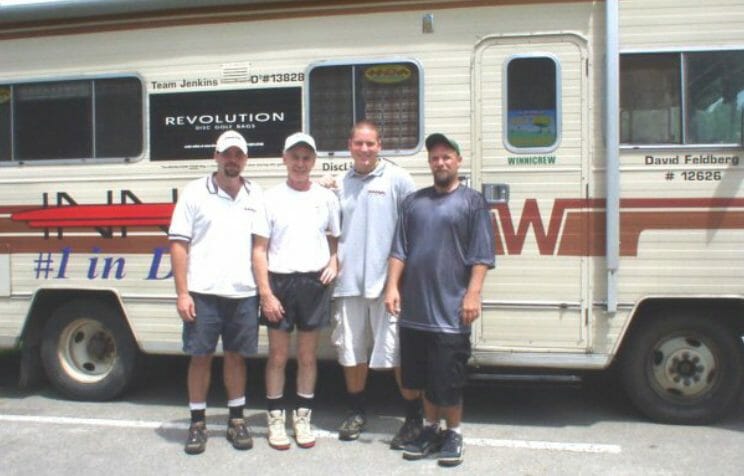
One iteration of the WinniCrew included Dave Feldberg (far left), Avery Jenkins (second from right), and Todd Branch (far right). Also pictured: Johnny Sias.
When did disc golf athletes become professionals and deserving of treatment as professional athletes instead of amateurs? When Todd Branch and Al Shack went on the first full year disc golf tour in 1999 dubbed the ‘WinniCrew’? When the National Tour started? When the Disc Golf Pro Tour was founded? When Paul McBeth and Ricky Wysocki started earning over $1,000,000 per year?
The DGPT and PDGA take no half measures when promoting the tour as a professional sport. In the announcement of the DGPT as the official Pro Tour of the PDGA, Mike Downes, Director of Operations for the PDGA, acknowledges the professional classification of the touring pros: “[The] DGPT will have the opportunity to continue to grow the prestige and visibility of the elite touring professionals, bringing new pros on the scene and new fans into the sport.”
It is time for PDGA and DGPT to back up their words and commit to building the administrative systems and polices that adequately serve the touring professional. The collective agreement between the NBA and its players association is 598 pages long, and disc golf will not get there overnight, but a custom disciplinary policy is a good place to start. The tension surrounding the cold war of self officiating has been swelling, and while Nikko’s outburst will hopefully be the most grievous incident we see, it will certainly not be the last. An appropriate disciplinary framework that adds the tools of progressive fines and tournament suspensions, to precede months-long suspensions, is a necessity as these organizations start to tinker with solutions to the broken officiating system.
Additionally, public transparency in the disciplinary process is a common practice in professional sports that is absent in disc golf, and something disc golfers have asked for in the past.
“In no way am I condoning misconduct on the course,” Paul McBeth said in an interview following Bradley Williams’ 18-month suspension in 2016. “The issue I have is when a rule is broken or a mistake is made and our governing body issues a punishment but provides no explanation to its professional members. My security as a player feels threatened. This is my livelihood, as well as many others, and we shouldn’t have to wonder what may happen if we ever make a mistake.”
Let the Punishment Fit the Crime
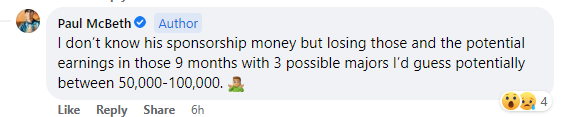
In the nine month suspension period a year earlier (August 8, 2021 – May 8, 2022), Nikko earned $21,601 in tournament earnings. On The Upshot podcast, Jeremy Koling recently discussed that disc sales still make up 75% of his income. Nikko was dropped by his primary sponsor before the PDGA decision, but he now doesn’t have an obvious means to replace that income for nine months. He has also already lost a sponsor in Clash Discs, a further blow to his earnings. If Nikko’s income was roughly 25% prizes / 75% sponsor related, he has lost a projected $86,404 in income. Admittedly, that is some back of the napkin math, but it also aligns with Paul McBeth’s estimate on social media:
Losing your main source of income without a viable path to replace it for nine months would be a devastating event for most people and their families. There are currently 106,817 active members in the PDGA. But only roughly 200 of them — or 0.19% — are at risk of this outcome for a violation of PDGA rules.
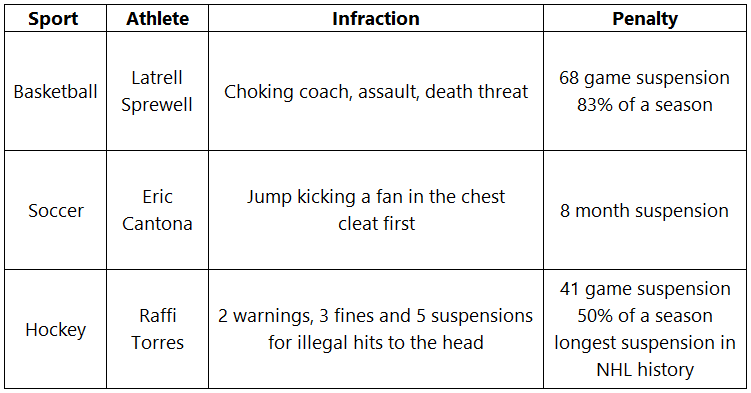
Getting into comparisons of infractions and penalties in other sports is tricky because the context can vary so much. There is no inherent violence in disc golf so one wouldn’t expect any interaction to end with an ear bitten off (1 year suspension for Mike Tyson). Gambling, doping, cheating, and off-course behavior are different categories of infraction with different justifications for penalties. When we look at on course infractions from other sports, I think it can be illustrative (but not conclusive) to consider two questions:
1. What does it take to receive a 9-month / majority of season ban in professional sports?
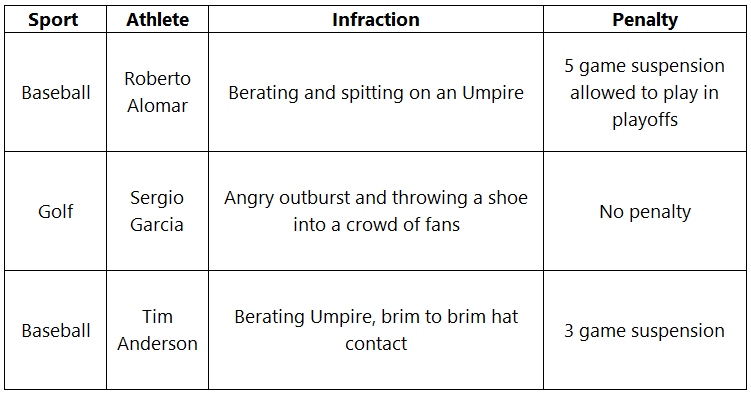
2. What penalty does a grossly inappropriate, angry, intimidating outburst receive in professional sports?
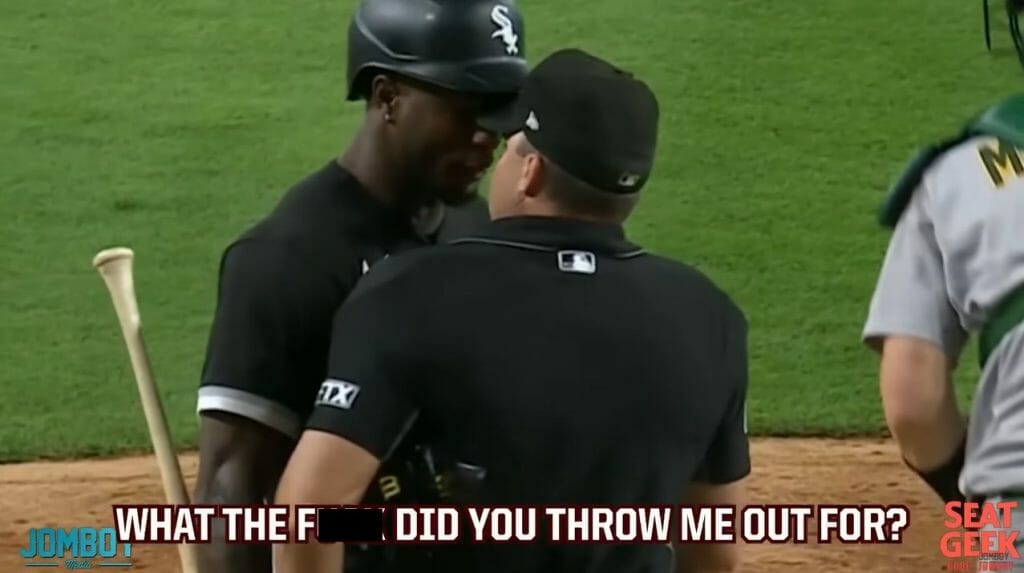
A screenshot of the Tim Anderson altercation with an umpire that earned him a three-game suspension (less than 2% of the baseball season).
The examples in question two include a level of physical contact which is a line Nikko did not cross. He was certainly right on the edge of that line and reportedly sustained the harassment after what was broadcasted by DGN, so it is reasonable if one concludes Nikko’s actions were worse than those examples. Intimidation is a class A offense in the PDGA disciplinary rules, after all. However, I don’t think it’s reasonable to say Nikko’s actions were closer to the incidents in question 1 than question 2, despite receiving a punishment that says so.
It is the PDGA’s prerogative to continue delivering punishments to professionals that greatly exceed industry standards, but I would urge them to reconsider and invest real time and resources to furthering a productive and mutually beneficial relationship with the touring professionals. Suspending Nikko for the rest of the calendar year, which includes two Majors and three playoff events that he was on a comfortable pace to qualify for, would still be an extreme punishment in the context of professional sports. But, it would be less draconian than nine months.
For touring professionals who are disturbed that they can lose your access to ply their trade and earn an income because of rules and punishments designed for an amateur membership base, or want to see more player input being reflected in health & safety, scheduling, or other policies that have direct effects on your livelihood, it may be time to seriously consider the formation of a players’ union, a common feature of sports in which players earn money from a for-profit sports entertainment business like the Disc Golf Pro Tour.
As a fan of the game, I count myself lucky that the talent (and media teams) of professional disc golf work incredibly hard, criss-crossing the United States and beyond to put on a show. We don’t see the enormous amount of effort that goes into making that happen: the 10+ hour days on the interstate, the work required to maintain a home on wheels, still finding the time to practice and maintain their game at an elite level, the time spent away from loved ones. Our professionals deserve basic and just job protections, and that is just as true for the players that make mistakes — and the ones you don’t like.
Article note: -1 Was haben jetzt die Schülies nochmal von diesem 3D-Dings, welches dafür sorgt, dass sich noch weniger 'Normalsterbliche' das Biotop Schule auch mal von innen anschauen ...? Ich checke es iwie nicht ...
Fotodokumentation aller IT-Komponenten in den Schulen abgeschlossen
360° Aufnahme aller Räume und 3D Scan an zehn digitalen Potsdamer Pilotschulen, Foto: LHP/Jan Brunzlow
Die Landeshauptstadt Potsdam wird, wie bereits um Juni dieses Jahres angekündigt, in Kooperation mit dem Zweckverband Digitale Kommunen in Brandenburg (DIKOM) in den kommenden Monaten alle Potsdamer Schulen in öffentlicher Trägerschaft bedarfsgerecht und nachhaltig digital ausstatten. Für zehn ausgewählte Pilotschulen ist der erste Meilenstein mit der Fotodokumentation aller IT-Komponenten, der 360° Aufnahme aller Räume und Flure sowie des 3D-Scans der Schulgebäude mittels einer Punktwolke durch die Sachsen Digital Consulting GmbH (SDC), einen Dienstleister des DIKOM, abgeschlossen.
Insbesondere für die 360° Aufnahmen und den 3D-Scan wurde modernste Technik und Software verwendet. Über die Software Reality Capture ist die Erfassung des aktuellen Zustandes der Schulgebäude im 3-dimensionalen Raum durch die Erstellung einer Punktwolke mit einem Laserscanner umgesetzt worden. Eine Punktwolke bietet die Möglichkeiten, Schnitte durch das Schulgebäude zu erstellen, virtuelle Begehungen durchzuführen sowie Vermessungen vorzunehmen.
„Ich freue mich sehr darüber, dass die Kooperation mit dem DIKOM und seinen Dienstleistern uns die Möglichkeit bietet, dass unsere Potsdamer Schulen mit modernster Technik erfasst und gescannt werden können. Von den sehr guten Ergebnissen werden wir im weiteren Verlauf für die konkreten Planungen zur Ausstattung und Umsetzung für jede Potsdamer Schule enorm profitieren. Unser Ziel ist es weiterhin, diese konkrete Planung im ersten Quartal 2023 für jede Potsdamer Schule vorliegen zu haben. Auch für den laufenden Betrieb bieten ergeben sich große Vorteile.“, sagte Oberbürgermeister Mike Schubert.
Für die 3D-Scans der Schulgebäude verwendet die SDC einen stationären Scanner mit hoher Reichweite. Für die Scans der Räume und Flure wird ein mobiler Laserscanner verwendet, welcher über einen sich drehenden Laserkopf 420.000 Laserstrahlen pro Sekunde aussendet. Jeder Laserstrahl liefert dabei Informationen zu einem Punkt. Die Summe aller Punkte ergibt dann eine Echtfarb-Punktwolke aus mehreren Millionen Einzelpunkten. Für die Landeshauptstadt Potsdam wird es somit zukünftig möglich sein, sich ein klares Bild jeder Schule verschaffen zu können, ohne zwingend vor Ort gehen zu müssen. Für den Schulbetrieb bringt das den großen Vorteil, dass zukünftig die Störungen durch Begehungen erheblich reduziert werden können.
„Als Schulträger haben wir die Verantwortung gegenüber allen Beteiligten des Schullebens, dass dieser geschützten Bereiche so wenig wie möglich geöffnet und gestört wird. Begehungen können zukünftig sprichwörtlich direkt aus dem Rathaus erfolgen. Da wir den IT-Support für die Schulen erfolgreich an einen externen Dienstleister vergeben konnten, wird auch dieser im Rahmen seiner Aufgaben an den Schulen von den Daten profitieren können.“, so Oberbürgermeister Mike Schubert.
Die planmäßig verlaufende Pilotierung wird dann unmittelbar, noch im laufenden Jahr, auf die anderen Schulen ausgeweitet. Diese Schulen partizipieren dann von den gewonnenen Erfahrungen bei den Pilotschulen. Der Roll-Out der im Zuge der Pilotierung geplanten Ausstattungen erfolgt in einer nachfolgenden Phase.
Die Landeshauptstadt ist seit Dezember 2020 Mitglied im Zweckverband Digitale Kommunen Brandenburg. Sie stellt als größte kreisfreie Kommune in Brandenburg einen zentralen Akteur im Verband dar und gestaltet aktiv die weitere Entwicklung des Verbands mit. Die Zusammenarbeit im und mit dem DIKOM und anderen Akteuren ist ein zentrales Element der wesentlichen Verbesserung der digitalen Bildungsinfrastruktur.
Zum Ende des Jahres 2022 wird der DIKOM seinen „Servicekatalog Schul-IT“ und die Möglichkeit der Kooperation auch den weiteren Mitgliedern offiziell vorstellen. Dieser enthält alle angebotenen Dienstleistungen rund um die Schul-IT.